

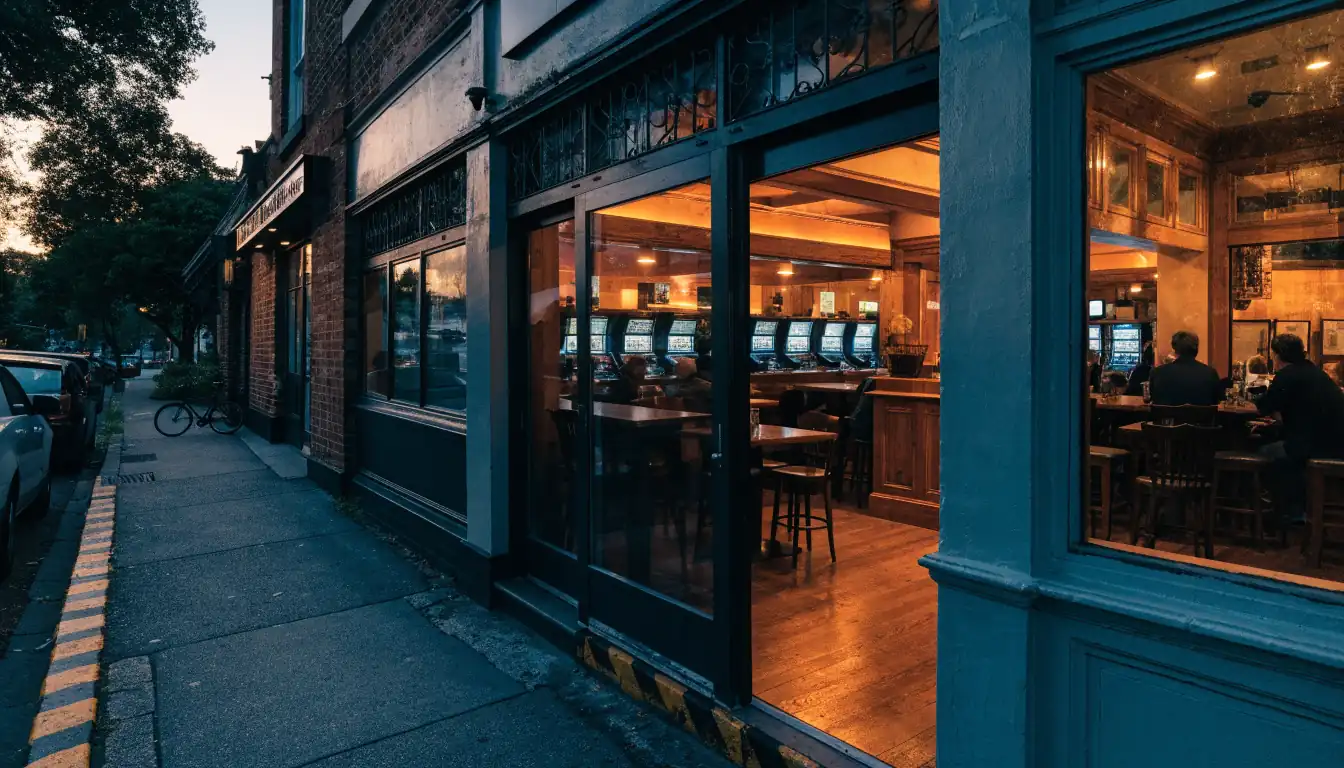
Venue listings may describe the whole premises, while gaming-room access can follow a separate schedule.
When NSW Pokies Are Open—and What “Open Now” Really Means
“Open now” is not a statewide promise. It is a question about a particular venue, at a particular time, and about whether its pokie room is available—not merely whether the building has opened its doors. A venue may have different operating hours for different facilities, so a general listing can leave out the detail that matters.
That distinction is easy to miss. A place can be open for meals, drinks or other activities while access to its gaming area follows a separate schedule. Conversely, a listing that describes a venue as closed may not reflect a recent change. Opening information is useful as a starting point, not a guarantee of entry. The venue itself is the practical source for its current status.
What an “open now” result can—and cannot—tell you
A listing may show ordinary trading hours, a broad venue schedule or information that has not been updated. None of those necessarily confirms that pokies are operating at the moment someone checks. Even a result labelled “open” may refer to the premises overall rather than the gaming room.
Choosing pokies in New South Wales means considering the details available about each operator, including licensing and practical payment information. Use these concise notes as a starting point and check the terms that matter to you before playing.
-
WinSpirit Casino
- License
- Curacao eGaming OGL/2024/923/0383 (Antillephone N.V.)
- Min. deposit
- A$30
WinSpirit Casino lists a Curacao eGaming licence, OGL/2024/923/0383, issued through Antillephone N.V. The stated minimum deposit is A$30.
-
SkyCrown
- License
- Tobique Gaming Commission
- Payout speed
- crypto ~10-15 minutes, fiat 1-5 days
- Min. deposit
- A$30
SkyCrown lists a Tobique Gaming Commission licence. Its stated payout times are around 10–15 minutes for crypto and 1–5 days for fiat, with a A$30 minimum deposit.
-
Vegaz Casino
- License
- Curacao OGL/2024/1335/0780
- Min. deposit
- EUR 20
Vegaz Casino lists a Curacao licence, OGL/2024/1335/0780. Its stated minimum deposit is EUR 20.
-
Ricky Casino
- Payout speed
- crypto under 1 hour, PayID 1-3 business days
- Min. deposit
- A$20 (A$30 to qualify for the bonus)
Ricky Casino lists crypto payouts under one hour and PayID payouts in 1–3 business days. The minimum deposit is A$20, or A$30 to qualify for the bonus.
-
DragonSlots Casino
- License
- Curacao Gaming Authority (Jumpman Gaming Ltd)
DragonSlots Casino lists a Curacao Gaming Authority licence, with Jumpman Gaming Ltd named in connection with it.
-
Thor Casino
- License
- Curacao – Antillephone N.V. (Versus Odds B.V.)
- Min. deposit
- EUR 20
Thor Casino lists a Curacao licence through Antillephone N.V., with Versus Odds B.V. named in connection with it. Its stated minimum deposit is EUR 20.
-
JustCasino
- License
- Curacao Gaming Control Board
JustCasino lists a Curacao Gaming Control Board licence.
-
Rollero Casino
- License
- Curacao Gaming Control Board OGL/2023/176/0095 (Hollycorn N.V.)
Rollero Casino lists a Curacao Gaming Control Board licence, OGL/2023/176/0095, with Hollycorn N.V. named in connection with it.
-
GoldenCrown
- License
- Curacao Gaming Control Board OGL/2023/176/0095 (Hollycorn N.V.)
GoldenCrown lists a Curacao Gaming Control Board licence, OGL/2023/176/0095, with Hollycorn N.V. named in connection with it.
-
Uptown Pokies
- License
- Curacao (operating since 2017)
- Min. deposit
- A$20
Uptown Pokies is described as operating since 2017 and lists a Curacao licence. Its stated minimum deposit is A$20.
For NSW pokies open now, then, the useful question is narrower: is the relevant gaming area admitting patrons at this time? Calling or checking the venue’s own current information can settle that more reliably than assuming its general opening hours apply to every part of the premises. Changes to a schedule, temporary interruptions or special arrangements can make older information misleading.
This is not a technicality. Opening status affects whether a journey is worthwhile, particularly when the trip is planned around a late finish or an early start. A result that looks definitive can still describe the wrong part of the venue.
Early and late openings are venue questions
Searches for pokies open early in NSW, or for play beginning at six or seven in the morning, do not establish a standard statewide opening time. The wording may suggest that a single schedule exists across the state; it does not. The hours of a gaming room have to be checked with the venue concerned.
The same applies to late-night access. A venue’s general business hours do not, by themselves, confirm that its pokie room remains open throughout that period. Nor does a room being available late at one venue establish the same arrangement elsewhere. The only sound answer is venue-specific and current.
A time in a search result is a clue, not a key.
The phrase “NSW pokies opening” can also mean different things: the time a venue opens, the time a gaming area starts admitting patrons, or whether it is accessible on a particular day. Treating those as interchangeable turns a simple practical check into an avoidable uncertainty. The detail to confirm is not just whether the venue is open, but whether the part being sought is open.

Entry is not the same as access
Opening hours are only one part of whether someone can play. In NSW, the legal age for gambling on poker machines is 18. Venues check identification for poker machine gambling, and underage gambling is unlawful; a person who is not legally old enough cannot make a venue’s open status relevant to them. Having identification available can also prevent an access question from being mistaken for a scheduling problem.
NSW also requires a pre-commitment step in which a player sets a loss limit before play. That requirement concerns access to gambling, not the venue’s trading hours, but it is another reason that “the doors are open” does not mean that every practical condition has been satisfied. A visit takes place within rules as well as a timetable.
Those are separate matters. A venue can be operating while an individual is not eligible to gamble, and a person’s eligibility does not confirm that a gaming room is open. The distinction is plain, if often overlooked.
Check the room, not just the building
A reliable check should establish the venue’s present operating status and whether the gaming area is available at the intended time. General map listings and directory pages may help identify a venue, but they should not be treated as a live record of every room’s schedule. Where the information is unclear, direct confirmation is the sensible step.
Do
- Check the specific gaming area schedule
- Contact the venue directly for current status
- Verify if the gaming room is admitting patrons
Don't
- Assume general building hours apply to pokies
- Rely on outdated map or directory listings
- Treat "open now" as a statewide guarantee
This approach avoids turning a broad phrase such as “pokies open in NSW” into a false statewide rule. NSW is not one timetable. A venue’s schedule may answer the question for that place, but it cannot stand in for another venue’s hours or establish what will be available later.
The practical meaning of “open now” is therefore modest: current access at a specific venue, confirmed for the time in question. It says nothing universal about the state, and it does not make an old listing current. For anyone planning around an early start, a late finish or a short window to visit, that small distinction is the difference between useful information and a wasted trip.
Pokie Names, Payback and the Mathematics Behind a Spin
Names such as Dragon Link, Lightning Link, Wolf Treasure, Book of Ra, Gonzo’s Quest, Mega Moolah and Starburst are familiar landmarks in pokie culture. They identify particular games, not a reliable order of merit. A recognisable title may catch the eye, but its name alone says nothing about what a session will return, whether it is available at a particular venue, or whether it pays better than another game in NSW.

That distinction matters because “best paying” sounds like a quality that can be read straight from a title. It cannot. The mathematics behind a pokie describes how outcomes are generated and how a game is designed to behave across a vast number of spins. It does not forecast the next result, or promise that a short session will resemble the theoretical pattern.
Every online pokie uses a Random Number Generator, or RNG, to produce outcomes. Each spin is independent: the RNG does not keep a score of earlier results and use it to compensate for them. A run of wins does not make a loss due, and a string of losses does not make a win more likely on the next spin. The sequence may feel as if it is building toward a correction. The mechanism does not share that feeling.
This independence also means that patterns noticed in a brief session are not evidence of a hidden cycle. A particular symbol appearing repeatedly, or a bonus feature seeming overdue, does not change the probabilities of the next spin. The result is determined afresh. In practical terms, the past is a story about what has happened, not a lever on what comes next.
RTP, short for return to player, is a theoretical measure of the share of wagered money a game is designed to pay back across a very large number of spins. It is useful as a long-run description of a game’s mathematical design, but it is not a session forecast. The scale is essential: an individual player’s outcomes over a short period can differ sharply from the theoretical return. RTP does not say that a set portion of a particular person’s stake will come back, nor does it set a timetable for when returns might occur.
The word “return” can therefore sound more personal than the calculation is. It describes a model over an enormous volume of play, not a promise attached to a visit or a particular balance. Two games with different designs may produce different long-term statistical profiles, but no percentage, even when published, turns chance into a dependable income stream. Past results cannot be used to recover losses by increasing bets. A session budget should be set in advance, and losses should not be chased.
- RTP
-
A theoretical measure of the share of wagered money a game is designed to pay back across a very large number of spins, rather than a forecast for an individual session.
Progressive jackpot pokies add another layer to the design. A small portion of each bet is added to a shared jackpot pool, which grows as play continues. That growing prize can make the game visually compelling, but it does not mean the jackpot is approaching for any individual player. The pool’s size is visible; the timing of a win is not made predictable by its size.
This is where the language of “payback” needs care. A jackpot’s growth describes the prize pool, while RTP describes theoretical return over extensive play; neither tells a player when a feature will trigger. Nor does a prominent jackpot label establish that a title is the best choice in NSW. It is a feature of the game’s structure, not a forecast.
For NSW players, familiar names can be a starting point for understanding what a game is called, not a substitute for understanding chance. The mechanics are indifferent to reputation, recent results and impatience. The mathematics offers a long view. A single spin offers only itself.
Online Pokies and the Border the Screen Cannot Ignore
A screen can make an offshore casino look close at hand, but it does not bring that service under Australian law. The Interactive Gambling Act 2001 prohibits operators from providing real-money online casino games, including pokies, to people in Australia. An Australian-run online casino cannot lawfully offer those games to players here. Sports betting is a different category; its availability does not make online casino games lawful.
Offshore sites sit in a more awkward position. It is technically not illegal for an Australian player to use one, but the operator is not regulated under Australian law. That is the grey area: the player is not treated as committing an offence simply by playing, while the service itself has no Australian casino licence to rely on. A licence from another jurisdiction does not turn an offshore casino into a locally authorised provider. Gambling sites operating lawfully in Australia must hold the relevant state authorisation, including an ILGA licence where applicable; that does not permit online casino services prohibited by federal law.

The distinction matters most when something goes wrong. Australian consumer and gambling protections do not extend in the same way to an offshore operator. Disputes may have limited routes for resolution, and winnings may be at risk if an operator becomes insolvent. Some operators also impose weekly withdrawal caps of AU$4,000, a condition that could matter sharply to a jackpot winner. These are not universal terms, so the operator’s rules need to be read as terms, not as decoration.
Bonuses add another layer of conditions. Offers described as no-deposit or real-money play may carry wagering requirements, maximum cashout limits, or clauses that allow winnings to be voided. A displayed balance is not necessarily a withdrawable balance. The promise is the bright part; the conditions do the governing.
Location controls can make an online lobby look different from one country to another. Casinos and software providers may use a player’s IP address to estimate their location and block access from excluded countries. When a game is region-blocked, it may not appear in the lobby from an Australian IP address; a failed load can also reflect a location restriction rather than a broken game. Such arrangements change over time, and an offshore licence may itself require a provider to exclude Australian players.
Legal Risk
Using a VPN to access region-blocked pokies breaches site terms and can lead to account suspension or complications with withdrawals.
A specialist review has described VPN use as a way to make a connection appear to come from another country while the player remains in Australia. That apparent change of location does not change the player’s physical location or the legal status of the service. Using a VPN to reach region-blocked pokies breaches site terms and can lead to account suspension. It may also complicate access to an account or a withdrawal if the operator questions the location used to play. A technical workaround is not a protection.
There is no reliable category of “best-paying” online pokies created by an NSW label, nor does a bonus title establish that a service is lawful or that its conditions are favourable. An offshore platform may be technically accessible at one moment and blocked or restricted at another. The border is still there. It is simply less visible than a venue door.
Finding Pokies Near Airports, the CBD and State Borders
A request for pokies near an airport sounds precise until “near” has to be measured. It might mean inside a terminal, in the surrounding suburb, or somewhere reachable after leaving the airport precinct. Those are different places, even when a map makes them look like one convenient cluster. The distinction matters: a venue’s proximity to an airport is not evidence that pokies are available inside the airport itself.
The same ambiguity follows a CBD label. A city centre is not a single point, and a listing described as nearby may sit beyond the area someone had in mind. “Near the CBD” is a relationship between two locations, not a category of venue. Without a named address, it can stretch from a short walk to a trip across the city.
State-border searches add another layer. The phrase “near NSW and Victoria” can refer to the NSW side, the Victorian side, or a place close enough to make the boundary seem incidental. It is not. The state named in a location description matters, and a border does not turn two jurisdictions into one local area. A broad reference to northern NSW has a similar weakness: it describes a large region, not a particular town or establishment.

These distinctions are useful because landmark language can make a vague location sound like a confirmed destination. An airport, a CBD, or a state line gives the mind a fixed point; the word “near” quietly supplies the rest. Yet the landmark alone says nothing about a venue’s address, its facilities, or how far away it is. A map pin and a useful description are not the same thing.
For a physical venue, the meaningful details are its name and location. Distance can then be judged against the landmark being used, rather than inferred from a loose label. Airport precincts, central business districts and border communities each cover different kinds of ground, so the same idea of “nearby” will not travel neatly between them.
This broad geography should also be kept separate from questions about particular venue types or individual towns. A CBD is a district, not a promise that a club is there; a state-border phrase is not a local recommendation; and an airport reference does not establish that a venue operates within the airport. The words point towards a place to investigate, but they do not identify one by themselves.

That is the quiet problem with proximity. It feels specific while leaving the important part unresolved. A landmark can orient a search; only a verifiable venue location can settle where the pokies actually are.
NSW Pokies Venues: Clubs, Machines and Local Scale
In New South Wales, clubs occupy a distinctive place in the landscape of pokie venues. They are not simply rooms organised around machines: the word “club” carries a promise of membership, shared identity and local belonging. That social language sits beside a more commercial reality. Electronic Gaming Machines make gambling part of the venue’s physical life, whether or not it is the reason every person has come through the door.
Scale, however, is easier to describe when it has a firm measure. Club Liverpool stands out among NSW clubs for the size of its operational pokie-machine floor: no other club in the state has more machines in operation. That makes it a clear point of reference for understanding how large a club venue can be. It does not, by itself, establish that the venue is best for every visitor, or that machine numbers are a measure of quality.
“Best” is a slippery word in this setting. One person may mean a broad choice of machines; another may care about the character of the club, its surroundings or whether it feels welcoming. A large machine count answers only the first kind of question, and even there it says nothing about the experience of a particular session. Size is a fact about a venue, not a verdict on it.
The club model also blurs a boundary that gambling policy often tries to keep distinct: recreation on one side, wagering on the other. A club can present itself as a social institution while also providing access to pokies. Those identities are not necessarily in conflict, but they do shape how gambling is encountered. It may appear not as a separate destination, but as one feature within a broader venue.
That matters when comparing NSW clubs with other kinds of places to play. A club’s local identity can make its machines feel embedded in ordinary community life. The atmosphere is different from the abstract language of a machine count, although the count remains useful when the question is one of scale. Club Liverpool gives that comparison a concrete anchor.
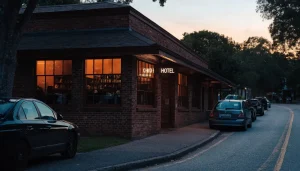
For anyone weighing up NSW pokie venues, the distinction is worth keeping: venue size can be established; “best” depends on what is being valued. The largest club floor is not automatically the most suitable setting, and a familiar local character does not alter what the machines are. Clubs make gambling look social. The arithmetic stays separate.
The 24-Hour Search: Why Venue Hours Need Checking
A claim that a venue is open around the clock sounds simple. In practice, it needs to mean that the relevant part of the venue is available throughout the day and night—not merely that the building, a bar or another service operates late. For anyone looking for pokies, the distinction matters: opening hours for a venue do not automatically establish the hours of its gaming area.
“Open now” and “open twenty-four hours” are different kinds of information. The first concerns a particular moment; the second makes a continuing claim about access. A listing may be useful for an initial check, but hours can change, and a general venue listing may not describe the pokie room separately. A late-night closing time is not the same as continuous operation.
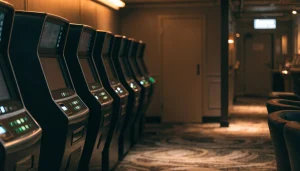
That is why sweeping statements about round-the-clock pokies across NSW are unreliable. Opening arrangements belong to individual venues, and a statewide label cannot settle what is happening at a particular premises. Nor does the phrase “24-hour pokies” identify a confirmed class of venues with uniform hours. It describes what someone hopes to find, not a schedule that can safely be assumed.
The detail to confirm is narrow: whether the gaming area is open at the intended time, and whether that information is current. Venue websites or direct contact are more useful for that purpose than a broad directory entry whose hours may refer to the premises as a whole. If the information is unclear, the uncertainty should remain uncertainty; a listing that says “open” does not fill in the missing detail.
There is also a difference between advertised hours and access on a particular occasion. A venue may publish a routine schedule, while an unexpected change affects availability. The practical consequence is modest but important: a journey based on an assumed all-night service may end at a closed entrance or an unavailable gaming room. The clock does not negotiate.
In NSW, therefore, a claim of uninterrupted pokie access should be treated as venue-specific and checked in its precise sense. A general statement about opening hours cannot establish that every gaming area operates through the night, and a label suggesting twenty-four-hour access should not be read as proof that it does. The sensible standard is not to infer continuous availability from late hours, a venue’s broader services or a search result alone. Verify the gaming area’s schedule before relying on it.
Pokies in Parkes: What the Available Evidence Can—and Cannot—Say
Parkes calls for a different kind of answer from a broad metropolitan search. A large city may have many clubs and venues to compare; a town-specific request depends on first establishing which local venues have Electronic Gaming Machines (EGMs). The place name alone does not establish that, and it cannot support a recommendation of a particular club or machine.
That distinction matters when “best” is attached to a location. It can mean a venue with a particular atmosphere, a convenient setting, or a preferred game selection. None of those qualities follows simply from the word *Parkes*. Naming a supposed favourite without a confirmed local basis would make a confident-sounding answer out of a guess. Not much of a guide.
A useful local listing would need to identify a venue and make clear what it offers. Game availability can vary between venues, so familiarity with a title elsewhere in NSW does not show that it is installed in Parkes. Nor does a general list of recognisable pokies establish which games are present in a particular town. The difference is between describing the state’s gambling landscape and describing a local floor.
The same care applies to searches for other regional centres, including Port Macquarie. A town name can narrow the subject, but it does not make details from one place transferable to another. Local recommendations need local confirmation; metropolitan assumptions do not travel well.
That is not a claim that the town has no pokies.
There is also a difference between a list of “best pokies NSW” and a local account. Statewide game names may help explain what players recognise, but they cannot answer which games are available in Parkes. A local guide should not blur those two questions or dress a statewide generalisation as a town-specific fact.
Parkes deserves the same precision as a CBD: the location must be connected to a real venue and a current offering before advice becomes useful. A modest answer, but an honest one.
Crown Casino Searches and the Limits of NSW-Specific Claims
Crown’s name can make a NSW pokies search feel more specific than the available information warrants. A brand association is not, by itself, confirmation that a particular pokie room exists in NSW, which machines it contains, or what those machines may pay. Crown Sydney is identified as a casino operator, but that does not substantiate claims about pokies there or establish a list of games for NSW players.

That distinction matters because names travel more easily than details. A search for Crown and NSW pokies may bring together the operator’s identity, a state location and a game category, but joining those terms does not verify the connection. Nor does it establish that a particular room is the “best” in NSW. That kind of judgement would need evidence about the venue and a clear basis for comparison; a familiar name is not a measure.
The same caution applies to claims about a maximum cash payout. A machine’s potential prize, a venue’s payment arrangements and the amount a player actually receives are different matters. No NSW-specific maximum can responsibly be inferred from the Crown name alone. Without confirmed details for a particular game and venue, a headline figure would be guesswork dressed as guidance.
There is also a boundary between a physical casino and online gambling. The Interactive Gambling Act 2001 prohibits operators from providing real-money online casino games, including pokies, to people located in Australia. A brand appearing in a venue-related search does not establish that an online service bearing its name is lawful or available to Australians. The distinction is not cosmetic: the law concerns the service being provided, not the familiarity of the logo.

For anyone trying to establish what Crown-related pokies are actually available in NSW, the useful evidence would be direct, current information from the relevant venue or regulator. Even then, a venue’s existence would not automatically confirm the game selection, room conditions or payout terms. Each is a separate claim, and each needs its own support.
Search results can make a chain of assumptions look like a fact: Crown, therefore NSW pokies; NSW pokies, therefore a known room; a known room, therefore a known maximum payout. The links do not prove themselves. A recognisable brand is a starting point for checking, not a substitute for the particulars. Short answer: not enough.
CBD Clubs, Loss Limits and the Social Rules of Play
A club in a central business district is more than a room of machines: it is a licensed social space, with the habits of hospitality arranged around gambling. The language of “the best pokies” can make the experience sound like a private contest between a player and a game. In practice, NSW has rules that place a boundary around that encounter before it begins.
Mandatory Pre-commitment
In New South Wales, players are required to set a loss limit before playing Electronic Gaming Machines (EGMs).
The central safeguard is mandatory pre-commitment. Players must set a loss limit before playing Electronic Gaming Machines (EGMs). The limit is not a forecast of what a session will cost, nor a promise that a machine will stop feeling compelling. It is a decision made in advance, while the choice is still separate from the next spin. That timing matters: rules about money are most useful before money is being lost.
A CBD club’s atmosphere can blur that distinction. Food, conversation and familiar surroundings make a venue feel ordinary; the machines are ordinary fixtures too. Yet the limit belongs to the gambling activity, not to the room’s social tone. A club setting does not turn a loss into a harmless membership expense. Nor does a run of losses offer a reason to raise bets in pursuit of recovery. Chasing losses is simply another way to let the session make decisions that were meant to be settled beforehand.
The phrase “self-exclusion” points to a different kind of boundary: staying away from gambling rather than defining an amount to lose while playing. Those ideas should not be confused. Pre-commitment is a required loss-limit measure in NSW; it is not, by itself, a description of every exclusion option a club may offer. Specific arrangements need to be confirmed with the relevant venue or authority rather than assumed from a CBD address.
Age and identity are part of the same public framework. Poker-machine gambling is for people aged eighteen and over, and venues must check identification. Attempting to gamble without meeting the legal requirements can carry legal consequences. A door policy is not a decorative formality.
The rules cannot make a club’s social life and its machines the same thing. They draw a line between them—plainly, and before play.

Newcastle and Cashless Pokies: A Question the Facts Do Not Settle
Newcastle gives a location to a pokies search; “cashless” gives it a different kind of promise. The two ideas are easy to join in a phrase and harder to treat as a confirmed description of local venues. A city name does not establish which clubs have Electronic Gaming Machines, what systems those machines use, or whether cashless gaming is available at a particular site.
The distinction matters because cashless gaming describes how play is funded or managed, not a separate kind of pokie. A machine’s title or reputation cannot answer whether a venue supports that arrangement. Nor does a general reference to NSW establish a Newcastle-specific practice. Local detail belongs to the individual venue, not to the label attached to a city.
“Best” is equally slippery. It might mean a preferred game, a venue with particular facilities, or simply a familiar name. Those are different judgements, and none follows from Newcastle’s name alone. A ranking without a stated, checkable basis is decoration.
There is a more substantial rule beneath the local question. In NSW, gambling on poker machines is restricted to adults aged 18 and over, and venues must check identification. The state also requires players to set a loss limit before playing. These rules do not identify a particular machine or establish whether it is cashless; they set boundaries around participation. They are not a guarantee against loss.
A session budget should be decided in advance and kept separate from money needed for ordinary expenses. Losses are not a reason to raise bets or keep playing in an attempt to recover them. The machine has no memory of what a player has already lost.
For anyone comparing Newcastle venues, the useful distinction is between a general impression and a venue’s own current information. Whether a named site offers cashless gaming, and what its arrangement involves, needs direct confirmation from that venue. Without that, “Newcastle” and “cashless” remain adjacent words, not a local guide.
A small distinction. A consequential one.
Created by the Casino WinSpirit editorial team.