


A practical guide to gaming-room access, local venue information and the limits of online and location searches.
Brisbane Pokies: Opening Hours and the Rules of the Room
Opening hours sound like a simple fact, printed beside an address and settled for the day. In practice, a venue’s general trading hours may not tell the whole story about its gaming room. A bar, club or hotel can keep different hours for different parts of its operation, and a listing that says the venue is open does not necessarily establish that pokies are available at that moment.
The reliable check is direct and current: consult the venue’s own website or contact the venue and ask specifically about the gaming room, not merely the building. A map listing or directory can be a useful starting point, but its hours may be broad, outdated or limited to the venue as a whole. If a late change, public holiday or temporary closure matters, confirmation from the venue is more useful than an old listing repeated across several sites. Repetition is not verification.
This distinction matters for searches made early in the morning or late at night. A request for pokies at a particular hour can produce a confident-looking answer without showing whether the room itself is operating. The answer should be treated as provisional unless it comes from a current venue source and clearly refers to the gaming area. There is no universal Brisbane timetable that can safely be applied to every venue.
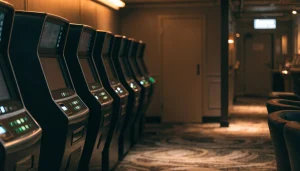
There is also a difference between “open” as a public-facing label and the actual conditions of play. A venue may have doors open while a particular service is unavailable; likewise, posted hours can describe ordinary operations rather than a one-off change. None of this is especially mysterious. It is simply the familiar administrative gap between a general schedule and what is happening on the floor.
The people on duty
Hours are not only about access. They also determine when the responsibilities attached to a gaming room are active. A report by regionriverina.com.au says that, from 1 July, venues operating more than 20 gaming machines are required to have a dedicated responsible gambling officer (RGO) on duty while those machines are running.
The threshold and the operating condition are important. The requirement is tied to venues with more than 20 machines, and the officer’s presence is tied to the period when the machines operate. It is not a statement that every venue has the same staffing arrangement, nor does it establish the opening hours of any particular Brisbane room. It does, however, make the hours of machine operation more than a matter of convenience: they are also the hours during which a named responsibility must be covered.
The responsible gambling officer is part of a broader shift in how venues are expected to manage the environment around pokies. The room is not just a collection of machines and chairs. It is a managed space, with human oversight built into the conditions under which gambling takes place. That requirement says something about the public view of gambling: risk is not treated solely as a private matter occurring between a person and a screen. The venue has a role, too.
Staffing Obligations
Venues operating more than 20 gaming machines are required to have a dedicated responsible gambling officer (RGO) on duty while those machines are running.
The rule is specific, not atmospheric. A general assurance that staff are present is not necessarily the same thing as knowing that the required officer is on duty while machines are operating. For a practical enquiry about opening, asking when pokies are available and whether the responsible gambling officer is on duty keeps the questions distinct. One concerns access; the other concerns the staffing obligation described in the report.
A sensible way to check
For anyone trying to establish whether pokies are available at a particular time, a short sequence is more dependable than guessing from a venue’s broad opening label:
- Check the venue’s own current information.
- Confirm that the stated hours apply to the gaming room, rather than only to the venue.
- Contact the venue if the timing is unusual or the information is unclear.
- Treat older directory entries and copied listings as leads, not final confirmation.
The process is plain, which is precisely its advantage. A search result may compress several distinctions into one word—open—but the real question is whether the relevant room is operating at the intended time. Asking that directly avoids turning a venue’s general hospitality schedule into a promise about its pokies.
Brisbane’s hours cannot be inferred from a single pattern, and a venue’s schedule should not be mistaken for a city-wide rule. The RGO requirement adds a concrete condition to the picture, but it does not make every room’s timetable identical. The useful habit is therefore modest: verify the room, verify the time, and read “open” with care.
A small word. A large gap.
What “Best” Can Mean When the Machines Stay the Same
Choosing pokies in Brisbane is easier when you can check practical details such as licensing, deposit minimums and payout options before signing up. Use this list as a starting point and confirm that each casino suits your preferences and location.
-
WinSpirit Casino
- License
- Curacao eGaming OGL/2024/923/0383 (Antillephone N.V.)
- Min. deposit
- A$30
WinSpirit Casino lists a Curacao eGaming licence, OGL/2024/923/0383, issued by Antillephone N.V. Its minimum deposit is A$30.
-
SkyCrown
- License
- Tobique Gaming Commission
- Payout speed
- crypto ~10-15 minutes, fiat 1-5 days
- Min. deposit
- A$30
SkyCrown lists a Tobique Gaming Commission licence and a minimum deposit of A$30. Its stated payout times are around 10–15 minutes for crypto and 1–5 days for fiat.
-
Vegaz Casino
- License
- Curacao OGL/2024/1335/0780
- Min. deposit
- EUR 20
Vegaz Casino lists a Curacao licence, OGL/2024/1335/0780, and a minimum deposit of EUR 20.
-
Ricky Casino
- Payout speed
- crypto under 1 hour, PayID 1-3 business days
- Min. deposit
- A$20 (A$30 to qualify for the bonus)
Ricky Casino has a minimum deposit of A$20, or A$30 to qualify for the bonus. Its stated payout times are under an hour for crypto and 1–3 business days for PayID.
-
DragonSlots Casino
- License
- Curacao Gaming Authority (Jumpman Gaming Ltd)
DragonSlots Casino lists a Curacao Gaming Authority licence under Jumpman Gaming Ltd.
-
Thor Casino
- License
- Curacao – Antillephone N.V. (Versus Odds B.V.)
- Min. deposit
- EUR 20
Thor Casino lists a Curacao licence from Antillephone N.V. for Versus Odds B.V. Its minimum deposit is EUR 20.
-
JustCasino
- License
- Curacao Gaming Control Board
JustCasino lists a Curacao Gaming Control Board licence.
-
Rollero Casino
- License
- Curacao Gaming Control Board OGL/2023/176/0095 (Hollycorn N.V.)
Rollero Casino lists a Curacao Gaming Control Board licence, OGL/2023/176/0095, under Hollycorn N.V.
-
GoldenCrown
- License
- Curacao Gaming Control Board OGL/2023/176/0095 (Hollycorn N.V.)
GoldenCrown lists a Curacao Gaming Control Board licence, OGL/2023/176/0095, under Hollycorn N.V.
-
Uptown Pokies
- License
- Curacao (operating since 2017)
- Min. deposit
- A$20
Uptown Pokies has operated since 2017 under a Curacao licence. Its minimum deposit is A$20.
A pokie’s reputation can travel further than its mathematics. A game remembered for a generous run may become a local favourite; a machine that has paid out recently may attract a queue. Neither story establishes what the next spin will do. Each spin is an independent event, decided by a Random Number Generator. The machine has no memory of yesterday’s luck, and a previous result does not make a particular outcome due.
That distinction matters when “best” is taken to mean “most likely to pay next”. No title can promise that. A pokie may produce a win on one spin and nothing on the next, without either result changing the odds of the spin that follows. What looks like a pattern across a short session is often just the human habit of finding a story in a run of random events. Casinos have long understood the appeal of that story. The machine does not share it.
There is a more technical way to compare games: return to player, or RTP. It describes the share of wagers a game is designed to return over a very large number of plays. It is a long-run measure, not a forecast for one person’s session. A displayed RTP therefore cannot tell anyone whether a particular visit to a Brisbane casino will end in a win, or how quickly a machine might pay.
Even that comparison can be less straightforward than the game’s familiar name suggests. A specialist review reports that some providers give casinos a choice of RTP settings for the same pokie. On that account, the game itself may look identical while its configured return differs between casinos. That is a claim about some provider arrangements, not a rule applying to every game or venue. The cabinet, symbols and features alone may not reveal which setting is in use.
This is where searches for the best pokies in Brisbane meet a limit. A popular title is not automatically the highest-returning one; a striking bonus feature is not evidence of a better RTP; and a winning story from a city venue does not establish a general advantage. The same caution applies to pokies in Brisbane’s CBD or elsewhere in the city. Location gives a game an address, not a more favourable sequence of random numbers.
Nor does a game’s theoretical return settle every practical comparison. It says nothing about whether a person will enjoy its pace, sound or rules, and it cannot turn a short session into a predictable one. A player choosing between games may be drawn to features or presentation, but those are different judgments from asking which pokie is more likely to return money. Blurring them produces confident claims where the underlying measures are quite separate.
Attention: A pokie's reputation for paying out or a high RTP does not guarantee a win in any individual session, as each spin is an independent event decided by a Random Number Generator.
“Best paying pokies” sounds like a tidy category, as if machines could be arranged in a reliable civic league table. In practice, a meaningful comparison would have to distinguish the game’s RTP setting from its name and separate a long-run figure from the outcome of an individual session. Without that distinction, an apparent ranking can confuse a machine’s design with a casino’s configuration—and both with luck.
The phrase “best pokies” can still describe a preference: a game’s theme, rhythm or features may suit one person more than another. But the phrase cannot promise a dependable payout, whether the setting is a Brisbane venue or a machine found elsewhere. A spin remains random. The reputation is not.
Online Pokies and the Australian Legal Line
A pokie played in a Brisbane venue and a real-money pokie offered through a website may look like versions of the same pastime. Legally, they sit on different sides of a line. The rules governing land-based gambling do not make online casino games lawful by association.
The Interactive Gambling Act 2001 prohibits companies from providing real-money online casino games, including pokies, to people in Australia unless they hold a domestic licence. No such licences have been issued, so there is no Australian-licensed online casino. A website describing itself as an online casino does not acquire domestic status merely by being accessible from a Brisbane home.
That distinction matters for searches for online play connected with Brisbane. A cashless feature, a local-sounding name or a claim about high limits cannot change the legal position. Nor does the language of “best paying” settle anything: it says nothing about whether an online service is lawful in Australia, and it cannot turn a website into a land-based venue. The two settings should not be blurred.

The law is directed at operators, not individual players. That is not the same as saying an offshore service is authorised here. The legal restriction falls on the company offering the prohibited service; players are not the target of that operator ban. A site may accept Australians, but acceptance is not evidence of an Australian licence or a local system of protection.
Enforcement also has a practical dimension. The Australian Communications and Media Authority (ACMA) enforces the Interactive Gambling Act 2001 and blocks access to illegal offshore gambling sites. Internet service providers are required to comply with ACMA’s blocklist. A website appearing in a search result, or remaining reachable at a particular moment, is therefore no reliable sign that it is lawful or secure.
The most consequential difference can emerge only after a dispute. If an offshore casino refuses to pay winnings, an Australian player has no legal recourse in Australia to recover them. That leaves a person dealing with a company outside the domestic licensing and complaint framework, rather than a local online casino subject to Australian oversight. The absence of a local remedy is not a small-print inconvenience. It is the point at which the distance between a website and a Brisbane venue becomes tangible.
None of this turns a search for online pokies near Brisbane into a practical alternative to land-based play. It describes a legal boundary, not an endorsement of offshore gambling. An operator’s willingness to accept a customer does not confer approval, and a claim of convenient access does not supply the protections that an Australian licence would represent. There is no such licence for online casinos.
Legal Risk
There are no Australian-licensed online casinos; using offshore services means players have no legal recourse in Australia if a company refuses to pay winnings.
The phrasing of a website can make the distinction seem less stark: Brisbane, cashless, local, high-limit. These are descriptions or claims, not legal categories. The governing question is whether real-money casino games are being offered to people in Australia, not what place name appears on the page. On that point, the domestic framework is unusually plain. The venue and the website are not interchangeable.
That is the legal line.
Brisbane Venues, Gaming-Machine Reporting and Safer Gambling Duties
A list of Brisbane venues would tell little by itself about how each gaming room is run. A name on a map does not establish how many machines are on site, what arrangements apply there, or whether a particular room suits someone’s idea of “best”. Those judgements need more than a ranking assembled from venue names.
One practical distinction matters: operating hours and duties inside a gaming room are separate questions. A venue’s posted hours concern access; staff requirements concern what must be in place while machines are in use. The latter say something about the obligations attached to operating gaming rooms, not about when a particular Brisbane venue opens.
A report on the changes says that, from 1 July, a venue operating more than 20 gaming machines must have a dedicated responsible gambling officer (RGO) present while those machines are running. The threshold is about the number of machines at a venue, not its profile, location or popularity. For a patron, the officer’s role gives the duty a human shape: harm is not treated solely as a private difficulty to be carried out of the room.
That is a meaningful change in the way responsibility is assigned. The machine may be designed for solitary play, but the room is a managed public space. Requiring a designated person to be on duty recognises that staff presence is part of the venue’s operation, rather than an optional gesture of goodwill. A rule on paper, of course, is not the same as a guarantee that every difficult moment will be recognised or resolved.
The same report describes a further record-keeping duty: venues are to maintain a gambling incident register. It is intended to capture occurrences, including situations in which a patron’s behaviour suggests exposure to gambling harm or its effects. That turns an individual episode into something the venue is expected to document, rather than leaving it to disappear into the noise of a busy room.
A register does not itself prevent harm. Its significance lies in making incidents legible to the organisation responsible for the premises. What gets recorded can be reviewed; what is never recorded is easier to overlook. The measure therefore links staff observation with institutional memory, even if the record alone cannot show how consistently a venue responds.
For Brisbane, these duties provide a more grounded way to think about venues than an unsupported league table. They do not identify a “best” room, nor do they supply venue-by-venue machine counts. They describe responsibilities that attach to certain operating conditions and to incidents within gaming areas. The distinction is modest but important: a venue’s reputation is not evidence of its safeguards, and a safeguard is not a rating.
The room has rules beyond the machine. That is the point.
Deposits, PayID and the Limits of Payment Convenience
A payment method can make a transfer feel ordinary. That is not the same as making the destination lawful, fair or safe. PayID is part of Australia’s New Payments Platform (NPP), a bank-supported system that uses end-to-end encryption. It lets people send money using an email address, mobile number or ABN instead of entering account details. Its design answers a practical question: how to route a payment. It does not certify what the payment is for.
PayID must first be linked to a bank account. That matters when considering claims about using it for real-money online play: the transaction depends on the bank connection, and a casino’s display of PayID as an option does not establish that the service is authorised in Australia. Nor does it show that a game’s return settings are transparent. A familiar payment logo is a narrow piece of information, not a stamp of approval.
There is also a difference between a transfer being technically possible and a bank permitting it. A specialist review has reported that some Australian banks, including major institutions, may block PayID payments to gambling merchants they recognise. Such controls can change, and the result may depend on the bank and the merchant. A failed transfer is not necessarily a fault in the payment network; it may reflect a bank’s own restrictions.
Card payments carry their own uncertainty. A specialist review has also reported that a gambling transaction made with a credit or debit card may be treated by the issuer as a cash advance, bringing fees and interest from the outset. The treatment depends on the issuer and transaction. Payment convenience can therefore conceal a different cost structure from an ordinary purchase.
In Australia, real-money online casino services are not a lawful domestic product. The question of payment support should not be mistaken for an invitation to use an offshore site: an offshore operator may accept a transfer without providing Australian legal recourse if it withholds winnings. BetStop applies to Australian-licensed operators; it does not bind offshore sites. Where a service asks for identity checks before withdrawal, identity and address documents need to be verified before any first withdrawal is attempted. That safeguard cannot make an otherwise prohibited service legitimate.

The useful distinction is modest but important: PayID describes a way to address a bank transfer, while the bank decides what it will process and the law governs what operators may offer. One is plumbing. The rest is not.
Pokies Near the Airport: What Location Searches Can—and Cannot—Establish
A request for pokies near Brisbane Airport can mean several different things: machines inside an airport building, a venue somewhere in the surrounding area, or simply a place that seems reachable from a flight or a stopover. Those are not interchangeable descriptions. A place-name attached to a result does not, by itself, establish that pokies are inside the airport or close to it.
The same caution applies to searches centred on the CBD. “Near” is elastic: it may describe a short walk, a drive, or a broad part of the city, depending on the person making the search. A listing that carries a Brisbane label says little about the route, distance or practical access. An airport and a city centre are useful reference points, not evidence of a particular venue’s location.
Location language also travels oddly. A search may combine Brisbane with a suburb or even a place in another state, without clarifying which one is intended. That ambiguity is not a map error so much as a human habit: place names are shortcuts, and shortcuts often leave out the detail that matters. The words “near me” are even more dependent on context, because their meaning changes with the person’s position.
A sensible distinction is between a venue’s stated address and the impression created by a label or map pin. The first can identify a place; the second may only help orient someone broadly. Neither should be stretched into a claim that a venue is inside the airport, beside the CBD, or convenient for a particular journey. Those conclusions require location information that can be checked, not an inference from a search phrase.
There is a further boundary that no map can soften. In Australia, gambling—including pokies—is restricted to people aged 18 and over. The rule applies regardless of whether the setting is a city venue, somewhere near an airport, or a place reached during travel. Proximity does not make the age requirement incidental.
An airport is designed around movement: arrivals, departures, waiting, onward transport. That makes it an unusually tempting landmark for a location search, but a landmark is not a venue directory. Likewise, “Brisbane” can describe a wide urban context without settling where any particular machine is located. The distinction matters because a neat phrase can sound more certain than the underlying geography.
Location labels are not addresses.
Twenty-Four-Hour Play and the People on Duty
The idea of round-the-clock pokies access can sound like a feature of a city. It is not evidence that a particular Brisbane venue is open through the night, or open at the moment someone checks. Opening hours belong to individual venues and can change; a general description of 24-hour play cannot settle the practical question of whether a room is operating now. Current hours need to be confirmed with the venue itself.
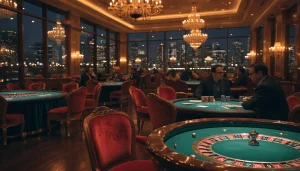
That distinction matters because machine access is only one part of a venue’s operation. The people working around the machines matter too. A report by regionriverina.com.au describes a requirement taking effect from 1 July: venues with more than 20 gaming machines are to have a dedicated responsible gambling officer (RGO) on duty while those machines are operating. The condition attaches to machine operation, not to a promise that the venue runs continuously.
The RGO is a human presence within a setting built around repeated, solitary decisions. Pokies can make time feel oddly frictionless: one spin follows another, while the room’s clock continues its ordinary work. A designated officer puts a point of contact into that environment. It does not establish venue hours, guarantee that every venue has the same arrangements, or turn an overnight opening into a safer one by itself.
The same report says venues have a one-month grace period to introduce responsible gambling officers and remove signage. A grace period is a transition, not proof that every venue has already completed the changes. Its existence also draws attention to the gap between a rule being announced and the room being organised around it.
Do
- Confirm opening hours directly with the venue
- Verify if the gaming room specifically is operating
- Check who is on duty when machines are running
Don't
- Rely on broad venue trading hours
- Trust outdated directory listings
- Assume "open now" labels guarantee machine access
For anyone trying to establish whether Brisbane has pokies available at all hours, the careful answer is venue-specific: published opening times need to be checked against current information from the venue, and an “open now” label should not be treated as a standing guarantee. Even a venue that operates late may not keep its machines running at every hour it remains open. The two clocks are different.
The more useful measure of a 24-hour claim, then, is not the confidence of the phrase but the details behind it: current operating information and a clear account of who is on duty when machines are running. Night access is a schedule. The officer requirement is a responsibility. Neither can substitute for the other.
South Brisbane and South Bank: Reading the Local Search
South Brisbane and South Bank are close enough in everyday description to blur into one another, but a place name in a search result is not a venue directory. The same is true of Northside or northern Brisbane: a broad area label may help narrow a map, yet it does not establish that a particular club or hotel has pokies, or that machines are located at a specific address. Local wording is a starting point, not confirmation.
That distinction matters because Brisbane’s neighbourhood names carry more certainty than the available information can support. South Bank suggests a compact destination; South Brisbane sounds like a wider district. Neither label, by itself, identifies a gaming room, its facilities or the terms attached to play. A listing may be old, incomplete or simply describe a nearby business rather than one inside the named area. The map can be precise while the underlying claim is not.

Questions about the maximum cash payout at a Brisbane venue have a similar limit. A suburb cannot answer them. Nor should a payout figure be inferred from a game’s name or from the fact that machines are present. Any claim about a particular machine or venue needs specific, current information; without that, a number would be decoration masquerading as guidance.
There is, however, a venue duty with a more human measure. A report by regionriverina.com.au says venues will be required to keep a gambling incident register, recording occurrences that include signs a patron may be at risk of, or affected by, gambling harm. The register turns attention from the machine to the room around it: staff are not merely recording transactions, but incidents in which someone’s behaviour raises concern.
That record is not a public rating of a venue, and it does not establish what happens at any particular South Brisbane or South Bank location. Its purpose is narrower and more consequential: to capture incidents that might otherwise vanish into the ordinary traffic of a gaming room. The distinction is worth keeping. A location label tells where a business is said to be; an incident record concerns what staff observe and document there.
Neighbourhood searches invite the tidy answer of a list. In this case, restraint is more useful. South Bank, South Brisbane and the northern suburbs are geographic descriptions, not evidence of a named pokies venue, a machine’s payout limit or a local pattern of harm. The register requirement offers a real point of context, but it cannot fill in those blanks.
Maps name places. They do not verify everything inside them.
CBD Clubs and the Age Boundary
A club in Brisbane’s central business district may mean a members’ club, a social venue or simply a place people meet after work. The label says something about the setting, not what facilities are inside. It cannot, by itself, establish that a particular club has pokies, or that a list of nearby venues would be complete.

That distinction matters because “best” can sound like a settled local ranking when it may only reflect what a person values: a familiar atmosphere, a convenient location or a quieter room. None of those preferences proves anything about a venue’s machines. A club’s name or CBD address is not evidence of a particular gaming offering.
There is a firmer boundary than geography. In Australia, the minimum age for gambling is 18, including for pokies played online. The rule does not change because the setting is a club, a city-centre venue or a machine room. It is an uncomplicated line, though the institutions around it are not: clubs have long combined recreation, membership and hospitality, while gambling rules mark out who may take part.
For anyone looking into self-exclusion, the distinction between local and offshore services also matters. BetStop applies to Australian-licensed operators; it does not bind offshore sites. An exclusion measure cannot do its intended work beyond the system that recognises it. That is a limit worth understanding, not a reason to treat offshore access as equivalent to a local venue’s arrangements.
CBD searches can therefore be read as a request for orientation, not as proof that a named club offers pokies or that one venue is better than another. The practical facts remain modest: a place’s address does not verify its facilities, and the age boundary applies wherever gambling takes place. A club may be a social institution first. The age rule is not optional.
Crown Brisbane Searches: The Difference Between a Query and a Verified Fact
“Crown Brisbane” places a company name beside a city, but the wording alone does not identify a casino, its operator or a room with pokies. Those are separate claims. A familiar brand can make a phrase sound like a settled local address; grammar is not a venue directory.
The distinction matters because several details can be mistaken for one another. A business name does not, by itself, establish who operates a particular property. A casino’s existence would not automatically show that pokies are available there. And a room described as “best” would still need some stated basis for comparison. Without those distinctions, a search phrase can quietly become an assertion.
A sound account of a Brisbane venue would name the place and operator clearly, then describe the specific facilities supported by reliable venue information. The same care applies to Crown-related wording: it should not be expanded into a list of machines, a location claim or a recommendation merely because those details seem like natural next steps. Plausibility is not evidence.
“Best pokies room” is especially slippery. It may mean a room someone considers comfortable, a selection of machines, or simply a venue they recognise. None of those meanings is self-explanatory, and none supplies a ranking. The word “best” often arrives carrying an invisible measure; unless the measure is stated, it is only a verdict without its reasoning.
This is not a question of whether a name is famous. It is a question of what each claim actually identifies: a brand, a venue, an operator, or the games available inside. Keeping those categories apart prevents a place-name from doing more work than it can bear.
For Brisbane, Crown-related wording should therefore be treated as a lead to clarify, not as proof of a local casino or pokies room. A precise description would need to establish the venue and its facilities directly. Until then, restraint is more useful than an invented certainty.
What is the legal age for online gambling in Australia?
You must be 18 or older to gamble online in Australia.
Are online pokies legal for Australian players?
Australian law prohibits operators from offering real-money online pokies to residents without a domestic licence, and no such licences have been issued. Players may legally use offshore sites that accept them, but they have no legal recourse in Australia if a site refuses to pay.
What is the cost-benefit calculation of casino promotions?
Check the wagering requirement and any limits on cashing out winnings. For example, a $500 bonus with a 40x requirement calls for $20,000 in bets; if the requirement applies to a $500 deposit plus a $500 bonus at 35x, it calls for $35,000 in bets.
Can casinos change the RTP of their games?
Yes. Some providers let casinos choose between different RTP settings for the same game, so a pokie’s return percentage can vary between casinos.
What is the minimum PayID deposit?
PayID is treated like other qualifying deposit methods. Minimum deposits are commonly AU$10–AU$20, though some operators accept AU$5.
Created by the Casino WinSpirit editorial team.