


Australian rules, free-play differences, game features and offshore recourse shape what online pokie play involves.
Online Pokies in Australia: Access Without a Local Licence
An Australian search for an online pokie can lead to a polished website, familiar game names and a button promising real-money play. None of that amounts to local authorisation. Australia has no licence for operators to provide real-money online pokies to people living here. The legal distinction is not between a professional-looking site and a suspicious one; it is between an offer made by an offshore business and the rules that apply in Australia.
The Interactive Gambling Act 2001 places the obligation on operators. Offering real-money online pokie machine games to people in Australia is an offence under the Act. The prohibition covers online casino-style gambling services, rather than merely setting standards for a domestic industry. As a result, there is no Australian online casino licence that an offshore operator can point to as permission to offer these games to Australian residents.
That is an unusual arrangement for a leisure activity sold through ordinary websites. The interface may resemble a consumer service, but its availability does not make the service lawful for the operator to provide here. Nor does an offshore licence change the Australian position: a licence issued elsewhere is not a local permission to offer real-money pokies in Australia. The legal focus falls on the provider, not on whether its software looks familiar or its website appears accessible.
The player’s position is different. An Australian resident does not commit an offence under the Interactive Gambling Act simply by playing real-money pokie games online with an offshore operator. That distinction can be obscured by the blunt language of prohibition. The law’s restriction on supplying the service should not be casually recast as a criminal ban on the person who uses it.
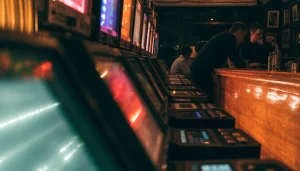
The boundary matters, but it does not turn an offshore site into a locally supervised one. The absence of an Australian licence means there is no domestic online casino licensing framework behind the offer. A site can accept attention from Australians without becoming part of Australia’s regulated casino system. Digital access, in other words, is not the same thing as legal standing.
Enforcement sits with the Australian Communications and Media Authority, generally known as ACMA. It is the federal body charged with enforcing the Interactive Gambling Act and monitoring compliance with national interactive-gambling rules. Its work gives the law a practical presence beyond the wording of legislation: ACMA can ask Australian internet service providers to block access to websites that supply prohibited gambling services or advertise them in Australia.
Blocking is not a declaration that every illegal site has vanished. It is a measure aimed at restricting access through Australian internet connections, and enforcement can also prompt services to leave the market. Since November 2019, ACMA has blocked more than 1,455 illegal gambling and affiliate websites after enforcement action. The scale is striking; the internet has never been especially impressed by a closed door.
There is a discrepancy in the reported count of services that have withdrawn since ACMA began enforcing the rules in 2017. One figure says more than 210 illegal services have left the Australian market; another puts the total above 190. Both accounts describe withdrawals following enforcement, but they do not give the same total.
Website blocking also helps explain why an online pokie may be visible in one moment and inaccessible in another. ACMA’s role is not to certify a game’s quality or to recommend a particular site. It is to enforce federal interactive-gambling rules, including by seeking blocks against prohibited services and advertising. A blocked address is an enforcement outcome, not a consumer rating.
Legal Status
Offering real-money online pokie machine games to people in Australia is an offence under the Interactive Gambling Act 2001.
Search results and promotional material can blur these categories. A website may describe itself as an online casino, promote real-money play or display an offshore licence, but those labels do not create an Australian licence. Advertising is also part of ACMA’s blocking remit when it promotes prohibited interactive gambling services in Australia. The commercial language may suggest seamless access; the legal structure remains less accommodating.
This is the setting in which talk of the “best” online pokie has to be read. There is no lawful Australian online market of real-money pokie operators from which a locally licensed choice can be made. That does not mean every website disappears from view, or that a player is committing an offence merely by visiting one. It means the offer exists outside a domestic licensing system, while federal enforcement works to restrict prohibited services and their advertising.
The distinction is easily lost in the small print of a website, where a business can sound established simply by being available. In Australia, availability is not a licence. ACMA’s blocking powers and enforcement record show that the prohibition is not only ceremonial, even if a blocked site is not the same as a closed internet.
What a Pokie Machine Actually Does
Choosing a pokie machine is only part of the experience: the casino’s licensing and practical payment details can also matter. Use these brief operator notes as a reference while deciding where to play.
-
WinSpirit Casino
- License
- Curacao eGaming OGL/2024/923/0383 (Antillephone N.V.)
- Min. deposit
- A$30
WinSpirit Casino lists a Curaçao eGaming licence, OGL/2024/923/0383, issued through Antillephone N.V. Its minimum deposit is A$30.
-
SkyCrown
- License
- Tobique Gaming Commission
- Payout speed
- crypto ~10-15 minutes, fiat 1-5 days
- Min. deposit
- A$30
SkyCrown lists a Tobique Gaming Commission licence. Its stated payout times are around 10–15 minutes for crypto and 1–5 days for fiat, with a minimum deposit of A$30.
-
Vegaz Casino
- License
- Curacao OGL/2024/1335/0780
- Min. deposit
- EUR 20
Vegaz Casino lists a Curaçao licence, OGL/2024/1335/0780. Its minimum deposit is EUR 20.
-
Ricky Casino
- Payout speed
- crypto under 1 hour, PayID 1-3 business days
- Min. deposit
- A$20 (A$30 to qualify for the bonus)
Ricky Casino lists crypto payouts in under an hour and PayID payouts in 1–3 business days. The minimum deposit is A$20, or A$30 to qualify for the bonus.
-
DragonSlots Casino
- License
- Curacao Gaming Authority (Jumpman Gaming Ltd)
DragonSlots Casino is listed as licensed by the Curaçao Gaming Authority, with Jumpman Gaming Ltd named in connection with the licence.
-
Thor Casino
- License
- Curacao – Antillephone N.V. (Versus Odds B.V.)
- Min. deposit
- EUR 20
Thor Casino lists a Curaçao licence through Antillephone N.V. (Versus Odds B.V.). Its minimum deposit is EUR 20.
-
JustCasino
- License
- Curacao Gaming Control Board
JustCasino lists a licence from the Curaçao Gaming Control Board.
-
Rollero Casino
- License
- Curacao Gaming Control Board OGL/2023/176/0095 (Hollycorn N.V.)
Rollero Casino lists a Curaçao Gaming Control Board licence, OGL/2023/176/0095, with Hollycorn N.V. named in connection with it.
-
GoldenCrown
- License
- Curacao Gaming Control Board OGL/2023/176/0095 (Hollycorn N.V.)
GoldenCrown lists a Curaçao Gaming Control Board licence, OGL/2023/176/0095, with Hollycorn N.V. named in connection with it.
-
Uptown Pokies
- License
- Curacao (operating since 2017)
- Min. deposit
- A$20
Uptown Pokies operates under a Curaçao licence and has been operating since 2017. Its minimum deposit is A$20.
A pokie presents a compact visual story: symbols appear in rows, a spin rearranges them, and the game checks the result against its rules. The familiar reels are the display, not a set of physical wheels whose movement can be read for clues. In an online game, a random number generator determines the outcome. Each spin is independent of the one before it.
That independence is easy to forget when a screen offers a near miss, repeats a symbol, or seems to settle into a rhythm. None of those appearances makes a later result more or less likely. The machine is not keeping a score of what has just happened and adjusting the next spin to compensate. A run of losses does not make a win due; a run of wins does not tell the next spin what to do.
The visible animation gives the result a beginning and an end. Underneath it is a set of game rules that connects symbol combinations to prizes. That distinction matters: the reels can look lively, while the logic being applied is exact and unromantic.
How a result is read
The paytable is the game’s rulebook. It shows which symbol combinations qualify for prizes and what those combinations pay at the selected stake. A symbol may have different values depending on how many appear, where they land, or whether a particular combination is required. Special symbols can also have their own rules, explained in the same table.

There is no single paytable shared by all pokie machines. One title may reward combinations along a small set of familiar lines; another may use a more elaborate arrangement. The design can make the game look more complex, but the paytable remains the place where the conditions are spelled out. A colourful title screen is not a substitute for those rules.
Paylines define the paths across the symbol display that count as winning combinations. Some games use fixed paylines, which remain active under the game’s rules. Others use variable paylines, where the number in play can be adjusted. The lines may run horizontally, diagonally, or follow less conventional patterns. What looks like a cluster of matching symbols is not necessarily a winning result unless it meets the game’s stated conditions.
This is one reason two games with similar artwork can play differently. Their symbol sets, paytables and line arrangements may not match. A title with many apparent ways to connect symbols does not automatically share the same structure as one with a few clearly marked lines. The details belong to the individual game.
Two games with similar artwork can play differently because their symbol sets, paytables and line arrangements may not match.
The spin, without the folklore
A spin starts with the player’s chosen settings and ends when the game evaluates the resulting symbols under its rules. The animation may pause, accelerate, or linger over a symbol; those touches shape the presentation, not the independence of the outcome. The machine does not remember that a symbol nearly landed on a line, because a near miss is still simply the result of that spin.
The same principle applies to buttons and screen effects. A stop button, where present, may change how quickly the animation concludes, but it does not turn a displayed sequence into a skill test or give the player control over the random result. The interface offers actions; the game’s rules determine what those actions mean.
A useful way to approach any unfamiliar pokie is therefore to separate spectacle from structure. The artwork tells a theme. The paytable and line rules explain how symbols are assessed. The random number generator determines each outcome, independently of the past. Those are different jobs, though the screen presents them as one event.
The label “best pokie machine” has little meaning without saying what kind of experience is being compared. A player drawn to a simple layout may prefer a different structure from someone who enjoys tracking several kinds of symbol combinations. That preference does not make one game’s next result more predictable. It only describes what the interface asks the player to follow.
The machine is a rulebook wearing theatre. The theatre is memorable.

Free Play, With One Important Difference
A free-play mode can make a pokie feel familiar before any money is involved. It gives a player room to see how the screen responds, where the game explains its symbols and features, and how its theme is carried through the play. That is useful as orientation. It is not a rehearsal of future results.
The distinction matters because a demo is often presented in the same visual language as the real-money version. The reels turn, symbols settle, animations play and win messages appear. The resemblance is deliberate: free play is meant to show the game, not to promise that its next performance will match what happened on screen. A run of attractive outcomes in a demo says nothing about the outcomes a real-money session will produce.
Each spin is generated by a random number generator and stands independently of the spin before it. A demo result does not set up a later result, and a sequence that looks unusually generous or unusually quiet does not create a pattern that can be carried into another session. The software supplies the same basic separation between spins; the money attached to the experience does not turn one result into a forecast.
What free play can show
Trying a pokie machine in free play can answer practical questions that do not require a wager. The interface may reveal where the rules are displayed, how the reels are arranged, what a feature looks like when it appears, and how the game communicates a win or a change in play. The theme, pace and sound can also be assessed without confusing enjoyment of the presentation with evidence about what a paid session will return.
Do
- Use free play to see how the screen responds
- Assess the theme, pace and sound
- Use demos to observe transitions between screens
Don't
- Treat a demo as a rehearsal of future results
- Assume a run of wins in a demo predicts real-money outcomes
- Mistake familiarity with controls for a winning strategy
This is one reason free play can be more useful than a screenshot or a short description. A still image cannot show how a game moves between its ordinary screen and its feature screens. A demo can. It can also help distinguish games that share a broad theme but feel different in their presentation. Those are observations about design, not a method for improving the result.
Free access is not necessarily identical across every version of a title. A demo may have settings or an interface that differ from another presentation of the game, so familiarity with one screen should not be mistaken for proof that every version will behave or appear the same way. The safe expectation is modest: a demo offers a look at the experience it contains.
Practice is not prediction
The word “practice” can carry an awkward implication in a game of chance. It suggests that repetition builds a skill which can be transferred to a later attempt. For a pokie, practice can build familiarity with controls and rules, but it cannot teach a player to anticipate the random outcome of the next spin. Nor can a sequence in free play reveal a reliable strategy for changing that outcome.
That limit is especially easy to forget when a demo produces a vivid run of wins. The mind is good at turning a sequence into a story: the machine seems warm, a feature seems due, or a particular pattern appears to be forming. But every spin remains independent. The story belongs to the observer, not to the machine.

A free pokie machine can therefore be a sensible way to decide whether the game’s layout and style are appealing. It is not a preview of money won, a test of a guaranteed tactic, or evidence that the same sequence will recur. Free-spin results are still results generated for the demo, not a promise attached to a later paid session.
Searches for a pokie machine for sale point towards a different thing altogether: physical equipment, rather than a free online demonstration of a game. The distinction is easy to blur because both may be called a machine, while one refers to hardware and the other to software presented on a screen. A demo is an invitation to inspect the latter’s design.
The useful boundary is plain. Free play can explain what a game looks and feels like; it cannot disclose what a future real-money session will do. Familiarity, not foresight.
Australian Casinos: The Land-Based Picture
In Perth, the distinction between a casino on a street map and one on a screen is not merely a matter of convenience. Crown Perth is the city’s sole legal land-based casino; Western Australia has no legal online casino market. The physical venue is therefore the setting in which legal casino pokies can be found locally, rather than one option among a range of licensed online alternatives.
Its gaming floor is substantial: Crown Perth has more than 2,500 machines. That figure describes the scale of the venue, not a promise that every machine offers the same game, terms or return. A large floor can make choice feel abundant, while the information available about each machine remains more limited than the number of cabinets might suggest.
The public picture of pokie machine payouts has an important boundary. Most machines at Crown Perth operate with an RTP between 87% and 92%, but the casino does not provide a machine-by-machine RTP list. That means the range can describe the general floor without identifying the exact RTP attached to a particular machine. It cannot, on its own, settle which casino pokie machine has the highest return.
This is a practical limit on comparison, not evidence that every machine is interchangeable. A person looking for the “best” Australian pokie machine may find a far more specific answer in a machine’s own displayed information than in a broad figure for an entire casino. Yet even the available details should not be mistaken for a ranking: the venue does not publish a complete public table matching every machine to its RTP.
Western Australian rules do require legal pokies to display their rules, paylines and prize table. This gives patrons access to information about the game on the machine itself. It is a concrete form of disclosure, though not a public catalogue of every pokie’s payout percentage. The difference matters: a displayed prize table explains a machine’s stated prizes and rules, while the casino-wide RTP range is a broader measure.
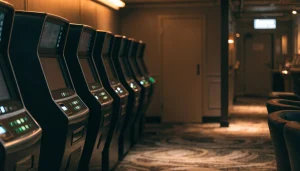
The familiar search for a highest-paying pokie machine runs into that distinction. With no machine-level RTP list from Crown Perth, a definitive comparison across its floor cannot be made from the published range alone. The venue’s scale supplies many choices; it does not supply a ranked guide to them. More cabinets, less certainty about the individual figure.
Nor does the phrase “pokie machine simulator” change what can be established about the machines at a physical casino. A simulation may resemble a game, but it cannot serve as a record of the particular machine settings on Crown Perth’s floor. The venue’s own displays remain the relevant place for the rules and prize information attached to a legal pokie there.
That modest arrangement says something about how casino choice is organised. The floor presents games as separate objects, each with its own visible terms, while public reporting offers a broader view rather than a complete machine-by-machine comparison. The result is a setting where information exists, but its granularity has limits. A casino can offer thousands of machines without publishing a definitive guide to the one with the largest return.
Game Features, Progressive Jackpots and Paid Bonuses
Some pokie features change the scale of a prize; others let a player skip part of a game’s usual route to a bonus. Both can make a screen feel more eventful. Neither makes the outcome less uncertain.
Progressive Jackpots
Networked prizes shared across multiple machines or casinos, allowing the jackpot to grow significantly.
Feature-Buy Slots
An option to pay a premium (often 50 to 100 times the base bet) to trigger a bonus feature directly.
Bonus Rounds
Events that can be activated through ordinary play or purchase, potentially producing prizes or small returns.
A progressive jackpot can be shared across a network of machines, or across machines in more than one casino. Titles such as Lightning Link, Dragon Link and Cash Express are examples of games connected in this way. Rather than being confined to one machine, the jackpot is associated with a wider network, allowing it to become a much larger prize.
That shared structure changes the social imagination of the machine. A result on one screen belongs, in a sense, to a system extending beyond the player’s immediate view. The jackpot’s scale is visible; the network behind it is not. That distance is part of the appeal, and part of the opacity.
A progressive prize should not be mistaken for a promise that a particular machine is “due”. A jackpot may be advertised prominently, but its presence does not tell anyone when it will be won. Nor does the name of a game alone establish whether its jackpot is networked: the specific feature matters.
Feature-buy slots take a different approach. They offer the option to pay a premium to trigger a bonus feature directly, rather than waiting for ordinary play to activate it. The bonus may involve free spins. A specialist review has described prices in the range of 50 to 100 times the base bet, but that is a reported range, not a fixed rule for every title or setting.
The appeal is obvious: the feature is brought forward, and the player knows what part of the game is being purchased. What is not purchased is a winning result. A bonus round can produce a prize, a small return, or nothing that offsets its cost. Paying to enter the feature does not turn it into a separate game with a guaranteed reward.

This distinction matters especially where the screen presents a feature as an event worth pursuing. The purchase price is immediate; the outcome remains uncertain. A feature-buy option can therefore make the cost of reaching a bonus easier to see while making the possible return feel more vivid than it is. The design is transparent in one sense, and persuasive in another.
Progressive jackpots and paid bonuses are features of game design, not evidence that a game is better value. Their spectacle is easy to count; their effect on any one session is not.
Odds, Volatility and the Meaning of RTP
RTP is a long-run accounting measure, not a forecast for the next spin. It describes the share of all money wagered on a pokie that is returned to players across a very large number of spins. That scale matters: the figure says something about the game’s theoretical behaviour over time, not what happens in one sitting, or to one person.
A specialist review gives Gates of Olympus an RTP of 96.5% and Sweet Bonanza an RTP of 96.48%. Those figures belong to the versions assessed in that review; they are not universal promises attached to the titles. Even where the published RTP is high, an individual session can end with a loss. A high figure does not ensure short-term wins, and a long-run average cannot be compressed into a personal result.
RTP Examples
According to a specialist review, Gates of Olympus has an RTP of 96.5% and Sweet Bonanza has an RTP of 96.48%. These figures apply to the specific versions assessed and are not universal promises.
Volatility describes a different feature: the pattern of payouts. Lower-volatility games tend to return smaller amounts more often. Higher-volatility games pay less frequently, but can produce larger wins. Neither category is inherently the best pokie to play. The distinction is about the shape of possible results, not a ranking of which machine is most likely to make a player a winner.
For someone wondering how to play a pokie machine, the practical implication is that RTP and volatility answer separate questions. RTP concerns the long-run share returned; volatility concerns how unevenly payouts may arrive. A game with a relatively high RTP can still have high volatility, and its returns may be irregular. A lower-volatility title may feel steadier, but frequent small wins do not mean that every session will recover its stake.
This is why “best” depends on what the word is being asked to mean. A player looking for frequent, modest payouts may prefer a lower-volatility game; someone drawn to the possibility of larger wins may accept the longer gaps associated with higher volatility. Neither preference identifies a best pokie to win on. The figures describe tendencies, not a route to a result.
Pokie machine odds are also easy to misread when a display, animation or sound makes a result feel significant. A dramatic sound can accompany a win, but it does not make the next outcome more likely. Each spin is independent, so past results do not improve or worsen the prospects of the next one. The machine keeps no score in the human sense.

Before play, a loss limit gives the session a boundary that RTP cannot provide. The percentage is a statistical description over an enormous run of play; the limit is a decision about what one session can cost. A useful distinction.
Real-Money Play and the Limits of Offshore Recourse
A real-money pokie offered to Australians by an offshore website can look like an ordinary commercial product: a game, a balance on screen and a button to place a bet. That appearance says little about the legal position. Under the Interactive Gambling Act 2001, an operator commits an offence by providing real-money online pokie games to people in Australia. An Australian resident who plays such a game is not, by that fact alone, committing an offence under the Act.
The distinction matters. The law places the prohibition on the service being offered, not on the resident accepting it. An offshore operator may present its own licence, terms and customer-service process, but those do not amount to an Australian authorisation to provide online casino games here. A polished interface is not a local safeguard.
Nor does the player’s lack of criminal liability turn the arrangement into a locally regulated service. Australia has no state-issued licences for online casinos in Victoria, and residents do not gain local regulatory recourse simply because a site accepts Australian customers. The operator’s willingness to take a deposit and the state’s willingness to supervise it are separate things.
Legal Recourse
Offshore casinos operate outside Australian regulation, meaning residents may have no effective legal route to compel an operator to honour withdrawals or resolve disputes.
That separation becomes practical if a dispute arises. If an offshore casino refuses a withdrawal or closes an account, the resident may find that Australian protections and complaint channels do not offer an effective route to compel the operator to act. The operator’s terms may describe a dispute process, but a promise in those terms is not the same as an Australian regulator with authority over the service. Offshore casinos may therefore leave players without effective legal recourse when winnings are withheld.
The arrangement has a peculiar imbalance: the player is not committing an offence under the Act merely by playing, while the service itself is prohibited from being offered to people in Australia. That difference can be obscured by advertising, familiar payment screens and the language of customer loyalty. None changes the legal character of the offer.
A real-money game is not made local by being available on a phone, nor by appearing alongside a pokie demo. Those are different forms of access, and the real-money version carries the more consequential question: who can act if the operator does not honour its own terms? In an offshore dispute, the answer may be no Australian authority with a straightforward power to resolve it.
That is the limit. Legal exposure for the operator and practical protection for the player are not the same matter.
Pokie Apps and the Games Behind the Jackpot
A pokie app is a way of presenting a game on a phone or tablet; the screen does not change what the game is, or where real-money play is lawful. In Australia, an app cannot turn a prohibited online pokie service into a permitted one. The legal distinction lies in the service being offered, not in whether it arrives through a browser, an app icon or another piece of software.

That matters because an app can make a casino floor’s visual language look portable. Reels, symbols and jackpot meters fit neatly on a small screen, but a familiar display is not evidence that the underlying game is connected to a real casino network. Nor does an app’s name establish who operates the service or what a jackpot represents.
A networked pokie works differently from a title whose prize is confined to one machine. Games such as Lightning Link, Dragon Link and Cash Express can connect multiple machines or casinos, with contributions building a progressive jackpot across that network. The prize display is therefore part of a larger arrangement: the machines are linked, and the jackpot can grow beyond the play taking place at any single unit. A screen can show the sum. It cannot, by itself, explain the network behind it.
The term “pokie machine API” points to a software interface through which systems can exchange information. That is a technical layer, not a promise of a particular game, jackpot or right to play. In the same way, “best pokie machine app” has no useful answer without knowing what the app provides and whether its offer is lawful in Australia. A polished interface and a large jackpot figure are not substitutes for those distinctions.
“Pokie machine cost” can also mean different things: the cost of a physical machine, the price of an app, or the amount involved in playing. Those are separate questions, and a jackpot label answers none of them. The sensible comparison is not between screens but between what each service actually offers and the legal setting in which it operates. A phone is only the frame.

New Names, Familiar Game Structures
A new pokie can arrive with a name designed to sound like a place, a character or a promise. Chilli, Buffalo and Queen of your own Nile each give a different impression before a player has seen the cabinet or its rules. That impression is part of the packaging, not a dependable guide to how the game is organised.
Pokie machine names often travel further than the details that distinguish one title from another. A familiar word or image can make a game easy to recognise across a casino floor, while the name alone says little about its prize structure. “Dragon Link” and “Lightning Link”, for instance, identify particular titles; the word “Link” is not a general label that proves every game bearing it shares the same format.
There is a more concrete distinction in some names. Lightning Link, Dragon Link and Cash Express are networked across multiple machines or casinos, allowing a progressive jackpot to build across that network. Their significance is not simply that the names recur on different cabinets. The connected machines contribute to a shared prize, which sets these titles apart from a game whose prizes are confined to its own play.
That difference can be easy to miss when a row of machines is treated as a catalogue of themes. A title may suggest fire, animals or an ancient world; a networked jackpot describes how a prize is connected across machines. These are different kinds of information. One is a name. The other is a feature of the game’s arrangement.
Chilli is a useful counterpoint: it is a recognisable title, but its name alone does not establish that it belongs to a networked jackpot game. The same restraint applies to other familiar labels. Buffalo, Book of Dead and Immortal Romance can be named without assuming that their titles tell the whole story.
Names invite quick recognition; formats require more care. On a casino floor, the small print and displayed rules carry the practical description, while the cabinet name does the work of attracting attention. A neat division of labour.
RTP Checks and Practical Limits
A published RTP is useful only when it belongs to the version actually being played. Some providers let operators select among different RTP settings for the same game, so a figure attached to a title may not describe every machine or online version carrying its name. The practical check is specific: confirm the stated RTP for the game at the chosen venue or operator, rather than relying on a figure copied from a general description.
In Victoria, the Victorian Gambling and Casino Control Commission requires electronic gaming machines to display their RTP. That makes the information part of the machine’s public rules, not a promise about the next session. A displayed percentage describes an average across a very large number of plays; an individual session can land far from it. A high figure does not ensure a short-term win.
This is where pokie machine tips often become less useful than they sound. No pattern of recent wins or losses can turn a long-run statistic into a forecast. RTP can help compare published settings, but it cannot say when a machine will pay or how much a particular session will return. The distinction is plain. The average is not a timetable.
A sensible limit is decided before play begins, when the number is still a boundary rather than a loss already being chased. Once that limit is reached, the RTP offers no reason to continue: it describes the game over time, not a debt owed to one player. These checks do not make outcomes predictable. They make the claims around them easier to read.
Is online gambling legal in Australia?
Real-money online pokies are not legally offered to Australian residents by operators under Australian law. However, an Australian resident does not commit an offence under the Interactive Gambling Act 2001 simply by playing with an offshore operator.
What law governs online gambling in Australia?
The Interactive Gambling Act 2001 governs online gambling services in Australia. ACMA enforces the Act and can request that internet service providers block prohibited gambling services or their advertising.
Is there a strategy to win at pokies?
No strategy can predict or influence a pokie’s next result: each spin is independent and determined by a random number generator. Past wins and losses do not change the odds of a future spin.
Created by the Casino WinSpirit editorial team.