

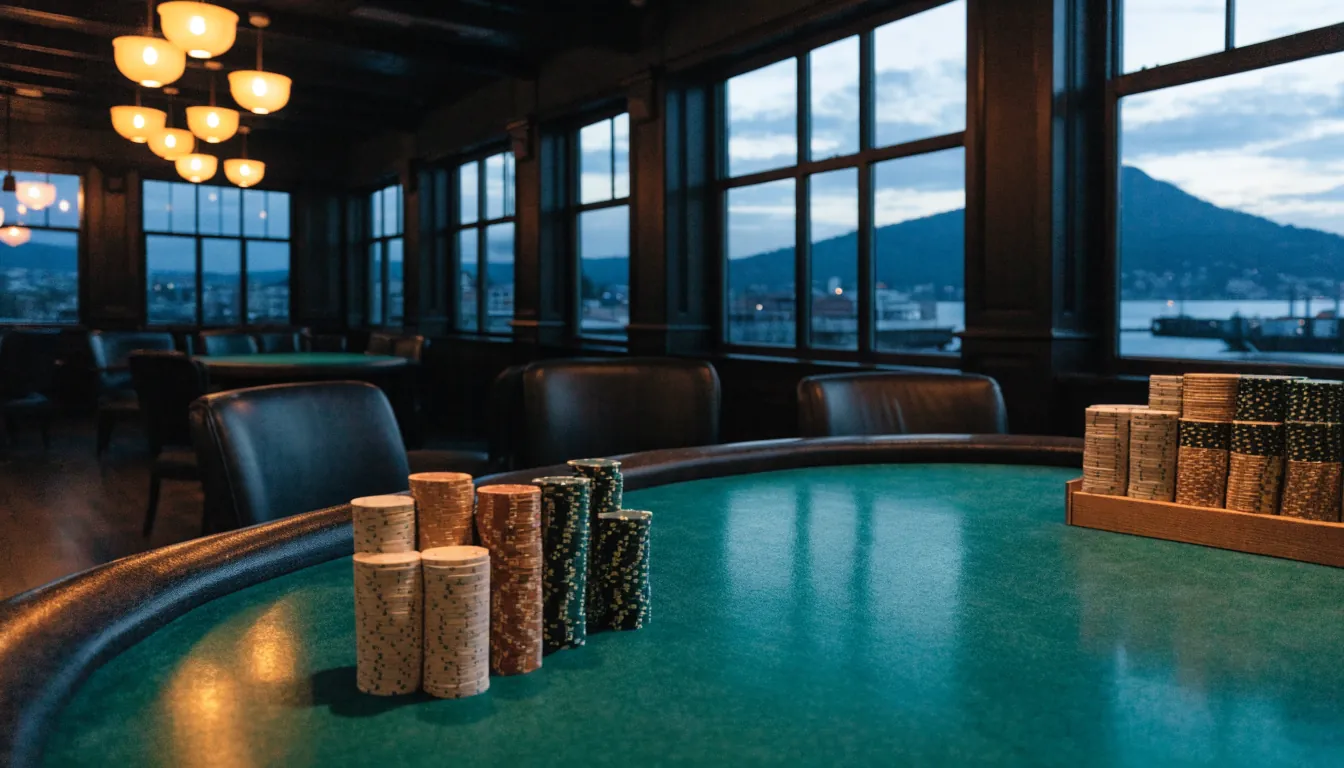
A practical look at poker and pokies, plus the venue details and facilities people often search for in Hobart.
Poker at Hobart Casino: Rooms and Tournaments
Poker and pokies are often filed together under “casino”, but they are different activities. Poker is a contest between players, with cards, decisions and, in a tournament, a structure that determines how the field proceeds. Pokies are Electronic Gaming Machines (EGMs): each game is played against the machine, not against the person at the next seat. A venue’s reputation for gaming therefore says nothing, by itself, about whether it runs poker.
That distinction matters when looking for poker at a Hobart casino. A dedicated poker room would mean more than a table somewhere on the premises: it would imply a place where cash games or organised competitions are offered. A poker tournament would need its own practical details, such as the date, registration arrangements, format and any entry conditions. Those details cannot be inferred from the word “casino” or from a general listing of gaming facilities.
Poker tournaments have a particular social rhythm. Players arrive with the same stated aim, but the contest is shaped by the changing size of their chip stacks and the decisions made at each table. Unlike a night spent at a pokie, a tournament is not a sequence of independent machine spins. It is a competition among people, governed by a format and house rules. The distinction is useful, not merely technical: it changes what a visitor needs to know before setting aside an evening.
A listing that says only “poker” may still leave the essential questions unanswered. It might describe a regular event, a one-off tournament, a private function or simply a game available elsewhere in the city. Likewise, a room mentioned in an old directory may not represent a current offering. Poker schedules are time-sensitive; an event title without a current date and participation information is not a reliable plan.
The same care applies to the phrase “rooms”. In a poker context, it may mean a dedicated playing area. In casino searches more broadly, it can mean hotel accommodation. These are separate subjects, and the wording alone does not settle which one is meant. A poker room is not a hotel room, and neither can be assumed from a venue’s name.

Sports bars add another layer of ambiguity. A bar may show sport, provide a social setting, or be mentioned near casino gaming in a directory; none of those descriptions establishes that poker is played there. Nor does a bar listing confirm that a poker tournament is scheduled. The useful information is the specific activity and its current arrangements, rather than a cluster of neighbouring labels.
For anyone trying to establish whether poker is taking place on a particular day, the distinction between an event listing and general venue information is important. “Open today” concerns the venue’s operating status, not necessarily the availability of a poker table. Even when a venue is open, a tournament may not be running; when an event is advertised, its schedule can have conditions of its own. An opening-hours notice cannot stand in for a poker calendar.
The word “poker” can also lead to confusion with online play. In Australia, the Interactive Gambling Act 2001 makes it illegal for operators to provide real-money online casino games, including poker, to people physically in the country. That is a separate question from finding a local, in-person game. An online platform’s claims about access or licensing do not establish that a Hobart venue offers a poker room, and they should not be treated as a substitute for local event information.
The best way to read any poker listing is to look for a clearly identified game, a current date or schedule, and conditions that explain how participation works. Without those, a result may be a broad category rather than an invitation to sit down at a table. Poker is communal by design; its practical details are part of the event, not fine print. A room name alone is not a tournament.
Accommodation Near the Casino
“Near the casino” sounds like a simple measure of distance. In practice, it can mean a short walk, a brief ride or merely an address in the same broad part of town. For accommodation in Hobart, the useful comparison is not the label attached to a listing but the route from its entrance to the venue entrance. A map pin can make two places look close while overlooking a steep street, a long block or a route that feels different after dark.
Proximity should be judged by the actual walking route from the accommodation entrance to the venue entrance, rather than by straight-line distance or map pins.
The casino’s location is therefore the starting point for judging any stay nearby. Once the exact entrance is identified, listings can be compared by walking route rather than straight-line distance. That distinction matters in a city where the shape of the streets and the ground beneath them can turn a small gap on a map into a less casual journey. “Close” is not a measurement.
A sensible comparison also separates proximity from the appeal of the room itself. A lower nightly price may be offset by transport costs or by a less convenient route; a property farther away may suit a longer stay better if it meets other needs. These are ordinary travel calculations, not secret features of a casino package. The arithmetic belongs to the whole trip.
Reading accommodation deals
Promotional wording can make a booking appear tied to the casino when it may simply be a general accommodation offer. A deal should be read as a set of conditions: what dates it covers, what the quoted price includes, whether it can be cancelled, and whether any part of the offer depends on a separate activity or purchase. The headline is the least informative part.
An accommodation promotion is not evidence of a room being on the casino premises, nor does it establish that a property is officially affiliated with the venue. Those are separate claims. Where a listing uses the casino’s name to describe location, the address and route should still be checked independently. A name in a headline can do more work than the geography warrants.
For a stay planned around an evening visit, practical details may carry more weight than a discount: arrival and departure arrangements, the distance to the entrance, and whether the route suits the travellers in the booking. For a longer visit, the balance may shift toward the accommodation’s own location and facilities. No single offer can answer both questions.
Searches for casino accommodation can also blur several ideas together: rooms associated with a venue, places in the surrounding area, and package deals. They are not interchangeable. A nearby property does not become a casino hotel by being convenient, and a promotion does not prove that it includes access to any particular facility. The distinction is plain, though advertisements are not always eager to make it so.
Do
- Check exact addresses and walking routes
- Review specific booking conditions and dates
- Verify the identity of the accommodation provider
Don't
- Rely on the label "close" as a measurement
- Assume a promotion proves official affiliation
- Treat a nearby property as a casino hotel
A stay built around distance
The most reliable way to assess proximity is to use the exact address of the accommodation and the venue entrance, then examine the route between them. A map’s walking estimate is a useful comparison, not a promise about conditions on the ground. For anyone relying on a vehicle, parking arrangements belong to a separate check: proximity does not guarantee a space, and a nearby address does not describe where a car can be left.
The word “deals” can suggest that a special rate is waiting simply because a booking is connected to a casino visit. That should not be assumed. Rates and terms vary by property and date, while a label such as “casino offer” needs a clear description of what is actually included. A room discount, a location claim and a venue promotion are three different things.
In the end, accommodation near Hobart Casino is best judged as a location decision before it is treated as a package. The route, the booking conditions and the precise meaning of any advertised offer are more useful than the promise of closeness alone. Proximity is a fact of the map. Value is a matter of the whole stay.
Casino Hotel Rooms in Hobart
Choosing an online casino from Hobart calls for checking the details that matter to you before signing up. This list gives a concise reference point using the information available for each operator.
-
WinSpirit Casino
- License
- Curacao eGaming OGL/2024/923/0383 (Antillephone N.V.)
- Min. deposit
- A$30
WinSpirit Casino lists a Curaçao eGaming OGL/2024/923/0383 licence issued by Antillephone N.V. Its minimum deposit is A$30.
-
SkyCrown
- License
- Tobique Gaming Commission
- Payout speed
- crypto ~10-15 minutes, fiat 1-5 days
- Min. deposit
- A$30
SkyCrown lists a Tobique Gaming Commission licence. Its stated payout times are around 10–15 minutes for crypto and 1–5 days for fiat, with a A$30 minimum deposit.
-
Vegaz Casino
- License
- Curacao OGL/2024/1335/0780
- Min. deposit
- EUR 20
Vegaz Casino lists a Curaçao OGL/2024/1335/0780 licence. Its minimum deposit is EUR 20.
-
Ricky Casino
- Payout speed
- crypto under 1 hour, PayID 1-3 business days
- Min. deposit
- A$20 (A$30 to qualify for the bonus)
Ricky Casino lists crypto payouts in under an hour and PayID payouts in 1–3 business days. The minimum deposit is A$20, or A$30 to qualify for the bonus.
-
DragonSlots Casino
- License
- Curacao Gaming Authority (Jumpman Gaming Ltd)
DragonSlots Casino lists a Curaçao Gaming Authority licence, with Jumpman Gaming Ltd named as the operator.
-
Thor Casino
- License
- Curacao – Antillephone N.V. (Versus Odds B.V.)
- Min. deposit
- EUR 20
Thor Casino lists a Curaçao licence associated with Antillephone N.V. and Versus Odds B.V. Its minimum deposit is EUR 20.
-
JustCasino
- License
- Curacao Gaming Control Board
JustCasino lists a Curaçao Gaming Control Board licence. Further details are not available in the information provided.
-
Rollero Casino
- License
- Curacao Gaming Control Board OGL/2023/176/0095 (Hollycorn N.V.)
Rollero Casino lists a Curaçao Gaming Control Board OGL/2023/176/0095 licence, with Hollycorn N.V. named in the licence details.
-
GoldenCrown
- License
- Curacao Gaming Control Board OGL/2023/176/0095 (Hollycorn N.V.)
GoldenCrown lists a Curaçao Gaming Control Board OGL/2023/176/0095 licence, with Hollycorn N.V. named in the licence details.
-
Uptown Pokies
- License
- Curacao (operating since 2017)
- Min. deposit
- A$20
Uptown Pokies operates under a Curaçao licence and has been operating since 2017. Its minimum deposit is A$20.
A hotel described as being “at” a casino can mean several different things: rooms in the same building, accommodation operated by the casino, or an independent property marketed in relation to the venue. Those arrangements are not interchangeable. A shared name or a short distance on a map does not, by itself, establish who runs the rooms or what a booking includes.
For anyone looking specifically for a hotel room associated with a Hobart casino, the useful distinction is between on-site accommodation and a separate hotel. The first suggests a direct connection with the venue; the second may simply be nearby. Hotel descriptions can blur that boundary, especially when a casino is the most recognisable local landmark. The wording of a listing matters less than its booking terms and the identity of the accommodation provider.
A room reservation should therefore be read as a lodging arrangement, not as evidence of a casino package. Details such as check-in conditions, cancellation rules, included services and any connection to venue facilities belong to the accommodation provider’s own terms. If a listing suggests that access, entertainment or another benefit comes with the room, that offer should be described explicitly in the booking rather than inferred from the casino reference.
There is a small but useful discipline in separating the room from the attraction. A hotel may be selected because a casino is part of the intended visit, but that does not make the hotel’s operation, amenities or booking conditions part of the casino’s. The distinction is ordinary consumer housekeeping, though travel marketing has never been especially eager to make ordinary things unmistakable.
The phrase “casino hotel” also says nothing reliable about the room itself. It does not establish its size, view, furnishings, accessibility features or price. Such details vary by property and room category, and should come from the accommodation’s current description, not from the label attached to it. The same applies to availability: a general reference to a hotel cannot promise that a particular room can be booked for particular dates.
Opening hours and show schedules are separate matters again. A hotel stay does not establish when a casino is open or whether a show is taking place; those are venue details that can change independently of accommodation arrangements. Keeping the two checks apart avoids a familiar travel mistake: treating a room booking as confirmation of everything happening around it.
For Hobart, then, “casino hotel” is best understood as a question about the relationship between lodging and venue, not as a room specification. A clear listing should identify the accommodation provider, explain whether the property is part of the casino or separate from it, and set out the room’s own conditions. Beyond that, the room should be judged on its stated features and booking terms—not on the glow of the casino next door.
Getting There, Parking and the Online Casino Distinction
A visit to a casino in Hobart is a physical journey, with the ordinary questions that come before one: where the entrance is, how to reach it, and what parking arrangements apply. Searches for free parking or valet service do not, by themselves, establish that either is available. Those details need to be confirmed through current venue information before they shape a travel plan; a map pin can show a destination, but it cannot settle the terms of parking.
Legal Warning
Under the Interactive Gambling Act 2001, it is illegal for operators to provide real-money online casino games to people physically located in Australia.
That distinction matters because convenience is often treated as a fact when it is only an expectation. A venue name attached to a parking search is not evidence of free spaces, a valet desk or a particular route in. The practical details belong to the physical location and can change. They should not be inferred from the word “casino”, or from an online listing that may describe a different business.
The same caution applies to bingo and dining. A request for bingo at a Hobart casino does not prove that bingo is part of the venue’s programme, just as a dining search does not identify a restaurant or confirm its service. These are separate offerings, each requiring its own current confirmation. Local entertainment and food belong to the venue’s public-facing life; they are not interchangeable with games delivered through a website.
The phrase “online casino in Hobart” points to a different subject altogether. It may sound like a digital version of a local venue, but Australian law draws a firm line around real-money online casino services. Under the Interactive Gambling Act 2001, an operator based in Australia cannot provide those services to people in Australia. The restriction concerns the operator’s conduct, not the existence of a building in Hobart.
Offshore websites occupy a different legal position, but that does not make them locally regulated alternatives. It is not an offence for an Australian player simply to use an offshore platform; however, those platforms are outside Australian regulation. That leaves a significant difference between being able to access a website and having the protections associated with a domestic regulatory framework. Geography on a screen is not local oversight.
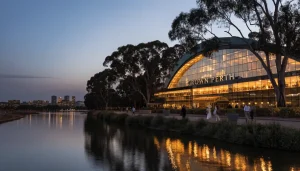
A venue visit and online gambling should therefore remain distinct in any practical plan. Driving directions, entry arrangements and parking relate to a place; an online casino account relates to a service governed by a different legal framework. The shared word “casino” blurs that boundary, while the law does not.
For anyone arranging a local visit, the sensible sequence is plain: establish the venue’s current location and access details, then confirm parking and any listed activities directly through current venue channels. For online play, a Hobart address does not turn an offshore operator into an Australian-regulated provider. The distinction is less glamorous than the search phrase. It is more consequential.
Baccarat, Bars and the Venue’s Contact Details
Baccarat and craps belong to the table-game tradition, where play is organised around a dealer, rules and a shared surface. Pokies are a different form of gambling: their rhythms are solitary, even when the machines sit in a crowded room. The distinction matters when checking what a venue offers. A general casino listing, or a description of its gaming floor, does not by itself establish that either table game is available at a particular time.
The same care applies to a bar. A venue may be described as having a bar without that label revealing its location, service hours, drinks menu or whether it is open during a particular event. Those are practical details, not small print. A bar attached to a gaming venue also sits within a wider social arrangement: somewhere to pause, meet, or wait, but not evidence that a particular service will be available on arrival.
Reliable Contact Method
-
1
Verify the Source
Start with a channel controlled by the venue or operator to avoid outdated third-party directory details.
-
2
Be Specific
Ask precise questions about specific games, event dates, or entry arrangements rather than general inquiries.
-
3
Confirm Details
Match provided phone numbers against official venue pages to ensure the contact information is current.
Finding a reliable contact route
For a current telephone number, the safest starting point is a channel controlled by the venue or its operator. A map listing can help identify the location, but third-party directories may preserve old numbers or business details after they change. When a listing gives a number, matching it against an official venue page or operator page reduces the chance of calling an outdated contact.
A useful enquiry should be specific. Questions about baccarat or craps can ask whether the game is offered and whether a table is operating on the intended date. Bar enquiries can cover opening and access; event enquiries can confirm whether a concert is scheduled and whether entry arrangements differ. A broad question about “what’s on” is easy to answer broadly. Precision is more useful.
Car-park information can also be checked through the venue’s own published contact route, especially where access, charges or event-day arrangements matter. A map pin indicates a place, not necessarily the correct entrance or the conditions for parking. Directions from a map service are best treated as a route aid rather than a promise about access.
Concert details deserve the same direct confirmation. An event title appearing in an old listing is not proof that tickets remain available, that the performance is still scheduled, or that the casino itself is the event organiser. Current venue or promoter information is the better reference for dates, entry conditions and any changes.

This is the unglamorous part of a night out: the number, the entrance, the confirmation. Yet hospitality depends on such particulars more than on a polished description of the room. A map can locate a building; only a current, accountable contact can settle a question about what is happening there.
Baccarat, bars, parking and concerts are separate reasons to make contact, and each calls for a precise answer. The useful details are the ones tied to a date and a specific service, not a generic label that may have outlived its moment.
Breakfast, Buffet Searches and Casino Careers
Breakfast has a different social timetable from the casino floor. It belongs to the hour when business travellers, families and late risers may all be looking for the same thing, but not necessarily the same kind of morning. A buffet adds another expectation: a set format, a choice of dishes and a service period that can be planned around. Those details matter more than the word “resort” attached to a venue name, which can suggest a complete holiday setting without establishing what is actually available.
For Hobart, breakfast and buffet arrangements should be treated as specific services, not inferred from the casino label or from language suggesting a resort. A breakfast service and a buffet breakfast are not interchangeable promises; neither does the presence of one establish the other. The same caution applies to seasonal packages and special dining offers, whose dates and conditions can change. The sensible distinction is between a venue’s general identity and the particular service being sought. A name is not a menu.
A venue's general identity as a "resort" does not automatically establish the availability of specific services like a breakfast buffet.
Casino rewards raise a related question of definition. The phrase might refer to a venue’s membership or loyalty scheme, but it does not by itself reveal what participation involves, which activities count, or whether benefits apply to dining, accommodation or other spending. Those are terms, not atmosphere. A rewards label cannot establish a member benefit without the conditions attached to it, and a scheme associated with one property should not be assumed to operate at another.
Employment searches have a more consequential edge. “Casino jobs” can cover many kinds of work: guest-facing roles, food service, security, administration, maintenance and specialist gaming operations. The mix depends on the employer and on current vacancies. A job title alone says little about shift patterns, training, qualifications or whether recruitment is handled directly by the venue or through another business. Those particulars belong in a vacancy notice, where responsibilities and employment conditions can be set out together.

The distinction between a casino role and a role at a business operating on the same premises is worth keeping in view. A kitchen, hotel or contractor may have a separate employer, even when the work happens under the same roof. Applications and employment terms should therefore be read against the named hiring organisation, rather than the building’s public identity. This is less glamorous than the word “resort”. It is also more useful.
The social meaning of casino work is often hidden behind the visitor’s view of a venue: a staffed room appears seamless because many different jobs have made it so. Breakfast service, where offered, similarly depends on a schedule and a team rather than the reassuring shorthand of a buffet search. For anyone considering work, the reliable particulars are the vacancy’s employer, duties and conditions. For anyone planning a morning, the reliable particulars are the stated service, format and hours. The labels are only a beginning.
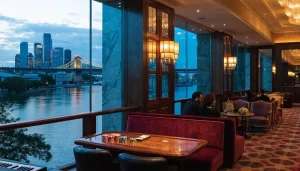
Opening Hours, Events and the Casino’s Future
Whether Hobart’s casino is open is a practical question, but an old listing or an undated review cannot settle it. Opening hours can change, and event schedules are more temporary still. A reliable answer needs a current notice from the venue or a current official business listing; without one, a precise opening time or confirmation of a reopening would be guesswork.
The same caution applies to entertainment. A search for events may turn up archived promotions, past performances or pages that remain online after plans have changed. Dates, ticket availability and cancellations should be confirmed against a current event notice before they are treated as settled. A review can describe someone’s experience at a particular time; it is not evidence that the same programme, service or operating arrangement applies now.
There is a useful distinction behind the word “casino”. A physical venue and online gambling services are not governed as though they were the same thing. Under the Interactive Gambling Act 2001, operators may not provide real-money online casino games—including slots and table games—to people in Australia. That rule concerns online services. It does not establish whether a particular Hobart venue is open, what it offers, or when it may reopen.
Development claims deserve similar care. A proposal, an approval and completed work are different stages, though they can blur together in headlines and conversation. Any claim about a Hobart casino redevelopment should be tied to a dated announcement from an accountable organisation or a relevant public authority. Without that, there is no sound basis for describing a project’s scope, timetable or effect on the venue. Rumour has excellent legs; evidence should have better paperwork.
Attention: Development claims or forecasts regarding job creation do not confirm that roles are currently available or that a project has been officially approved.
Employment prospects follow the same pattern. General claims that development will create jobs do not confirm that roles are available, or that a particular project has been approved. A current vacancy notice is the meaningful evidence for an open position; a broad forecast is not a recruitment announcement. Applicants also need the employer, role description and application details to be current before acting on them.
Menu pages, like event listings, can become stale. A menu found online does not establish that it is current or that the venue is operating as described. For any visit, the useful checks are the date of the information, its source and whether it directly confirms the specific detail at issue: opening, an event, a job or a development update. Until those points are confirmed, a confident claim about the casino’s present schedule or future plans would say more than the available evidence allows.
Address, Dress Code, Bars and Spa Searches
An address is more than a pin on a map: it determines whether a venue is part of an evening’s plans or a separate journey. Anyone looking for the Hobart casino’s location should rely on a current, official venue listing rather than an old directory entry or a map result copied elsewhere. Address records can persist online after details change, while opening hours, entry arrangements and transport information belong to separate checks.
Dress codes are similarly easy to misread. A photograph of a crowded gaming floor, a bar or a formal event may suggest a rule that applies only to that setting—or no rule at all. Clothing expectations can differ between public areas and particular events, and a general impression is not a policy. For a planned visit, the relevant standard is the venue’s current guidance, not a rule inferred from pictures or passed along in a review.
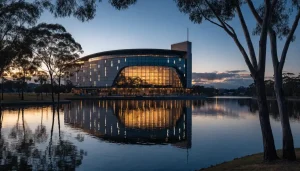
Bars invite a different sort of assumption. A search for a bar at a casino does not establish how many there are, what they serve, when they open or whether entry is tied to another part of the venue. Those are practical details, not atmosphere. The same distinction applies to spa searches: a spa or day-spa listing should be confirmed as an operating facility, with its own services and booking arrangements, rather than inferred from the word “casino” or from an unrelated accommodation listing.
Career searches also need to lead to a current employer’s recruitment information. A venue’s name in an old job advertisement does not show that the role remains available, and a general hospitality vacancy may not be connected to casino operations. Applicants need the employer, position and application route to match; the label alone is not enough.
The broad phrase “casino games” can point to very different things: table games, electronic gaming machines, or online products. A physical venue’s offer cannot be inferred from an online game catalogue, and an online catalogue does not establish what is available in Hobart. In Australia, the Interactive Gambling Act 2001 makes it illegal for operators to provide real-money online casino games to people physically in the country. The distinction matters. A local venue and an offshore website do not share the same legal setting.
For location, dress, bar facilities, spa services or vacancies, current first-party information is the useful dividing line between a place that can be planned around and a name circulating through stale listings. Search results travel farther than facts.
Restaurants at Hobart Casino
A meal attached to a casino can mean several different things: a full-service restaurant, a bar serving food, or a dining room in a nearby business that has become associated with the venue in local listings. Those distinctions matter. A restaurant implies a particular sort of visit, with its own menu and service arrangements; a bar listing, even one described as rooftop, does not establish that a restaurant is on site.
For anyone considering dining at the Hobart casino, the useful question is not simply whether food is mentioned somewhere, but which venue is meant and what it offers now. A current listing should identify the restaurant by name and separate its details from those of the casino as a whole. Menus, service hours and booking arrangements belong to the individual dining business, and can change independently of gaming or entertainment information.
That is less glamorous than a glossy photograph. It is also more useful.

Restaurant names and menus should not be inferred from the words “casino” or “Hobart”. Nor does a reference to a casino rooftop bar, on its own, establish a rooftop restaurant, a dining menu or a view available to diners. In a city, businesses can share an address, sit close together or appear under overlapping labels; a search result may compress those differences into a single line. The practical check is whether the restaurant’s own current information connects it to the venue and specifies the food service being offered.
The distinction also helps when planning a meal around an evening out. A restaurant booking and a casino visit are separate arrangements, even when they happen in the same complex. Menu availability, seating and service times are matters for the dining venue, not assumptions that follow from the casino’s name. If a listing gives only a broad description, it may be describing the area rather than an in-house restaurant.
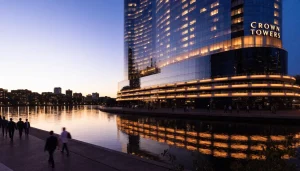
The phrase “restaurants at Hobart Casino” therefore needs a little precision. It can refer to dining inside the venue, a restaurant associated with it, or restaurants nearby. Those are not interchangeable claims. A rooftop bar, meanwhile, is a separate category unless its own details explicitly describe restaurant service.
For a reliable plan, the relevant restaurant’s current listing should provide the name, menu and operating information together. Without that connection, the sensible description is simply that dining is being sought in the casino’s vicinity—not that a particular restaurant, cuisine or rooftop dining experience is part of the venue.
Food and Pool Searches: What Can Be Verified
Food and a pool belong to different kinds of venue planning, though they often appear together in searches about a casino. A meal may mean a restaurant, a bar serving food, a café or a dedicated food court; those are not interchangeable descriptions. The phrase “food court” suggests a particular arrangement of food outlets, not simply that meals are available somewhere on a property.
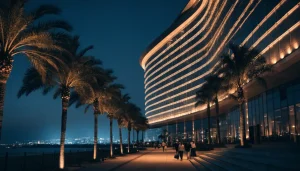
The same distinction matters for a pool. A pool might be part of a hotel, a leisure facility or a neighbouring business rather than the casino itself. A shared address or a similar name would not, by itself, establish that casino guests can use it. Access conditions matter as much as the existence of a facility: a pool may be reserved for hotel guests or operate separately.
For Hobart Casino, the name alone cannot settle either question. It should not be treated as proof of a food court, a particular food outlet or pool access. Those details need to come from current venue information, with any stated access rules read alongside the facility description. Old photographs, directory entries and casual mentions can blur the line between the casino, nearby businesses and accommodation.
This is a modest distinction, but a useful one. “Food at the casino” can describe several different services, while “a casino pool” implies both a facility and permission to use it. Neither follows automatically from the other, or from the venue’s name. A plan built on those assumptions may arrive at the wrong door.
Are online casino-style games restricted in Australia?
Yes. The Interactive Gambling Act restricts Australian-based operators from offering online casino games such as pokies, blackjack and roulette to people in Australia. Offshore sites may be accessible, but they are not regulated under Australian law.
What does the legal status of offshore online casinos and NSW gambling law say?
It is not technically illegal for Australian players to use offshore online casinos, but those sites are not regulated under Australian law. In NSW, players must be at least 18 to use poker machines, and mandatory pre-commitment systems require players to set a loss limit before playing.
What is pokies region blocking?
Region blocking uses a player’s IP address to identify their location and restrict access to games or providers in certain countries. Blocked games may not appear in the lobby or may fail to load.
What are the different types of pokies?
Examples include progressive jackpot pokies, which add a portion of bets to a growing jackpot, and buy-bonus games, which let players pay to enter a bonus round directly. Free-spin games are another type of bonus feature.
What is the legal age to play pokies in NSW?
You must be at least 18 to play poker machines in NSW.
What are the bonuses and wagering requirements?
Free-spin winnings commonly carry wagering requirements of 20x to 50x before withdrawal; the stated requirement for free-spin winnings is 30x. Pokies typically contribute 100% toward wagering requirements.
Created by the Casino WinSpirit editorial team.